
The Larijan highlands rise south of Amol like a wall that separates the Caspian lowlands from the central plateau of Iran. The Haraz River cuts through this wall, carving a valley that climbs steadily from the coastal plain into the mountains, and along this valley a network of seasonal streams descends from the peaks to join the river. Pardme Waterfall is one of these streams, a seasonal cascade that tumbles through rocky ground near the village of Pardme and disappears into the Haraz system below. The waterfall is at its most impressive in spring, when snowmelt feeds the river and the surrounding hillsides burst into wildflower. In summer and autumn the flow diminishes, but the dramatic rock formations and the clear mountain air continue to draw visitors seeking a quiet escape from the coastal crowds below.
Where is Pardme Waterfall?
The waterfall is located in the Bayjan area, beside Pardme village and the Pardme River, approximately seventy kilometres south of Amol in Mazandaran province. The Larijan region is a highland district that straddles the Alborz mountains, with villages scattered along the Haraz River valley and its tributaries. The area is known for its mountain scenery, its traditional architecture, and its position on the main road between Tehran and the Caspian coast.
The seasonal Pardme River stretches eighteen kilometres from its source on the slopes of Sorkheh and Bum mountains, two peaks that rise above the Haraz valley, before joining the Shirkola River system. The river is fed by snowmelt and mountain springs, and its flow varies dramatically with the seasons. In spring, when the snow melts, the river is full and the waterfall is at its most powerful. By late summer, the flow can reduce to a trickle, and in dry years the waterfall may stop altogether.
The village of Pardme sits beside the river, in a narrow valley surrounded by steep slopes. The village is small, with traditional Mazani architecture of stone and wood, and the terraced fields around it are cultivated with rice, vegetables, and fruit trees. The combination of the village, the river, and the waterfall creates a landscape that is both cultivated and wild, a mountain valley where people have lived for centuries and the natural forces of water and rock continue to shape the terrain.
The Waterfall and the Pardme River
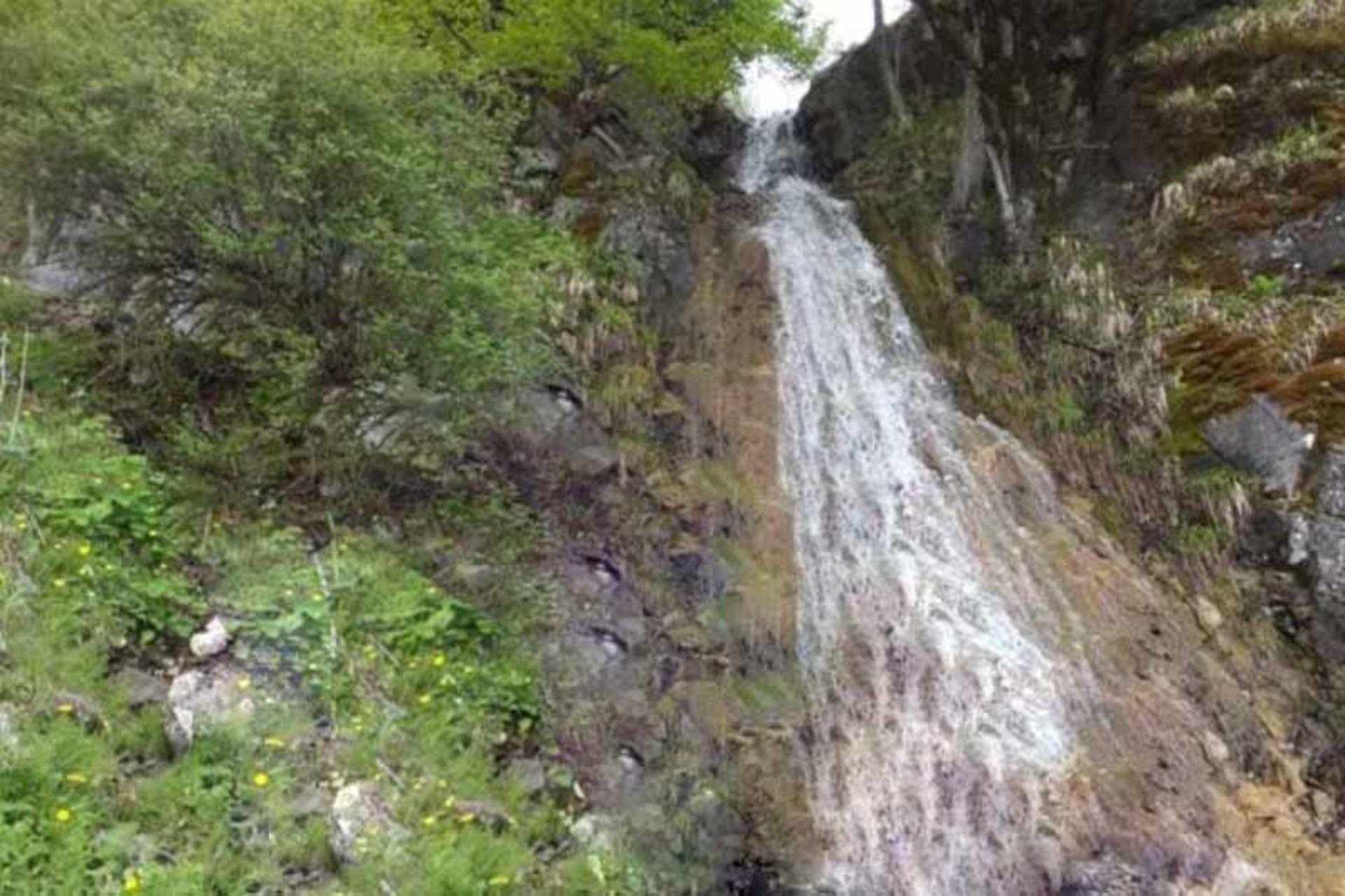
The waterfall itself is a cascade through rocky terrain, where the Pardme River drops over a series of ledges and boulders before plunging into a clear pool below. The rock formations around the waterfall are dramatic, with smooth surfaces polished by centuries of flowing water and angular faces where the rock has fractured along natural joints. The water is clear and cold, fed by snowmelt from the peaks above, and the sound of the cascade echoes off the valley walls.
The river above the waterfall flows through a narrow channel, picking up speed as it descends from the higher slopes. The channel is lined with boulders and rocks, and the water rushes between them, creating small rapids and pools along the way. The waterfall is the most dramatic feature of the river's course, but the entire stretch from the village to the falls is worth exploring, with interesting rock formations and clear pools that make pleasant stopping points for a picnic or a rest.
The river below the waterfall continues its descent towards the Haraz valley, joining the Shirkola River and eventually the Haraz itself. The water from the Pardme River contributes to the Haraz system, which is one of the major rivers of Mazandaran province and a vital water source for the region. The relationship between the Pardme River and the larger Haraz system is part of what makes the waterfall significant, a small but integral part of a larger hydrological network that shapes the landscape and supports the agriculture of the valley.
Pardme Village and Its Setting
The village of Pardme is worth a visit in its own right, with traditional Mazani architecture that reflects the building traditions of the region. The houses are built of stone and wood, with sloping roofs designed to shed the heavy rain and snow that falls in the mountains. The village is small, with a population that has lived here for generations, and the terraced fields around it are cultivated with rice, vegetables, and fruit trees.

The terraces are a feature of the landscape, held by stone walls and irrigated by channels that bring water from the river. The combination of the terraces, the traditional houses, and the surrounding mountains creates a landscape that is both productive and beautiful, a mountain valley where people have adapted to the steep terrain and the seasonal rhythms of water and growth.

The people of Pardme are known for their hospitality, and visitors are welcome to walk through the village and see the traditional way of life. The village has no tourist infrastructure, no shops or cafes catering specifically to visitors, and the experience is authentic and uncommercial. In spring and summer, the fields are green and the orchards are in blossom or heavy with fruit. In autumn, the harvest is brought in and the leaves turn gold. In winter, the village is quiet and the snow covers the fields and roofs.
How to get there
From Amol, drive south along the Larijan road, following the Haraz River valley into the mountains. The road is the main route between Amol and Tehran, and it climbs steadily through the Alborz mountains, passing through villages and offering views of the river and the peaks. The waterfall is signposted near Pardme village, roughly seventy kilometres from Amol. The turnoff from the main road is clear, and the road to the village is paved for most of the way.
Open Mehyar and choose Taxi from Amol for a scenic mountain drive. The drive takes about two hours from Amol to Pardme village, and the route passes through some of the most dramatic scenery in the Alborz. The road is paved but narrow in sections, with steep drops in places, so drive carefully and be prepared for winding sections.
Mehyar Buses connects Amol to Tehran and other cities along the Caspian coast. If you are coming from Tehran, the drive to Amol takes about two hours, and from there another two hours to Pardme village. The total journey from Tehran to the waterfall is about four hours by car.
If you are driving yourself, parking is available near the village, and from there the walk to the waterfall is short. The path is well-marked and used daily by locals, so navigation is straightforward. The road from Amol to the village is signposted, and the turnoff from the main Haraz road is clear.
The visit takes three to four hours, including time to walk from the village to the waterfall, spend time at the falls, explore the village, and return. The trail is not long, but the scenery is worth lingering over, and many visitors spend time picnicking by the river or exploring the rock formations around the waterfall.
Best time to visit
Spring, from April to May, brings the strongest water flow and the greenest landscape. The snowmelt from the peaks feeds the river at its fullest, and the hillsides are covered in wildflowers. The weather is warm but not hot, and the waterfall is at its most impressive.
Early summer, in June, is also pleasant, though the waterfall flow may be lower than in spring. The weather is warm, and the village and surrounding fields are green and productive. By late summer, the flow diminishes, and in dry years the waterfall may reduce to a trickle or stop altogether.
Autumn, particularly September and October, offers clear skies and comfortable hiking temperatures. The waterfall flow is lower than in spring, but the colours of the autumn foliage and the crisp mountain air make it a pleasant time to visit.
Winter brings snow and cold, making the access road difficult and the trail to the waterfall icy. The waterfall continues to flow, fed by underground springs, but the visit requires warm clothing and careful footing. Check local conditions before setting out in winter, and consider using a vehicle with good traction.
Practical tips
The visit is free and the waterfall is accessible during daylight hours. There are no entrance gates or formal opening hours. Bring water and food, as facilities are limited. The village may have small shops where you can buy basics, but it is better to bring what you need from Amol.
The trail is easy to moderate in difficulty. It does not require special equipment, but sturdy shoes are recommended, as the path can be muddy and uneven near the waterfall. Children can manage the walk with supervision, and older visitors should take care on the wetter sections near the falls.
Photography is good in all seasons, with the best light in the morning when the sun is behind the eastern peaks and the valley is in soft shadow. The waterfall itself is photogenic from multiple angles, and the rock formations around the falls provide interesting subjects.
Combine the visit with other attractions in the area if you have time. The Haraz River valley offers many opportunities for exploration, with villages, waterfalls, and mountain scenery along the route. The city of Amol itself has historical sites, and the Caspian coast is accessible for a swim or a boat ride on the same day. The road between Tehran and the Caspian via the Haraz valley is one of the most scenic drives in Iran, and the journey is worth taking even if you do not stop at every waterfall along the way.