
The eastern Alborz mountains rise above the desert plateau of Semnan province like a wall that catches what little moisture crosses from the Caspian. Where the mountains face north, the slopes are green with elm, oak, and wild fruit trees, and water runs in the valleys even in late summer. Nekaraman Waterfall is one of those places where the mountain shows its wetter face. The cascade drops over a rocky ledge on the slopes of Shahvar Mountain, the highest peak in the eastern Alborz, and falls into a clear pool surrounded by forest. The approach from Nekaraman village winds through orchards and terraced gardens, past stone houses that have stood for centuries, and the whole experience feels more like a walk through a living landscape than a hike to a tourist attraction.

Where is Nekaraman Waterfall?
The waterfall is located three kilometres from Nekaraman village, which itself sits about twenty-five kilometres north of Shahroud city in Semnan province. Shahroud lies on the eastern edge of the Alborz range, roughly four hundred kilometres east of Tehran on the main highway to Mashhad. The city is known as a gateway to the eastern Alborz, and the mountains north of Shahroud are greener and more vegetated than the arid plains to the south.
Shahvar Mountain, on whose slopes the waterfall sits, is the highest peak in the eastern Alborz, reaching over four thousand metres. The mountain creates a rain shadow that affects the climate of the entire region, with the northern slopes catching more precipitation and supporting denser forest cover than the southern flanks. Nekaraman village is situated on the northern side of Shahvar, in a valley that benefits from the mountain's moisture and the streams that descend from its peaks.
The wider area around Shahroud is known for its contrast between desert and mountain. To the south of the city, the landscape is arid and sparsely vegetated, part of the Dasht-e Kavir desert system. To the north, the Alborz mountains rise sharply, and within a short drive you can move from desert plain to forested valley. Nekaraman Waterfall is one of the most accessible of these northern valleys, and the drive from Shahroud to the village passes through this dramatic transition in landscape.
The Waterfall and Its Setting
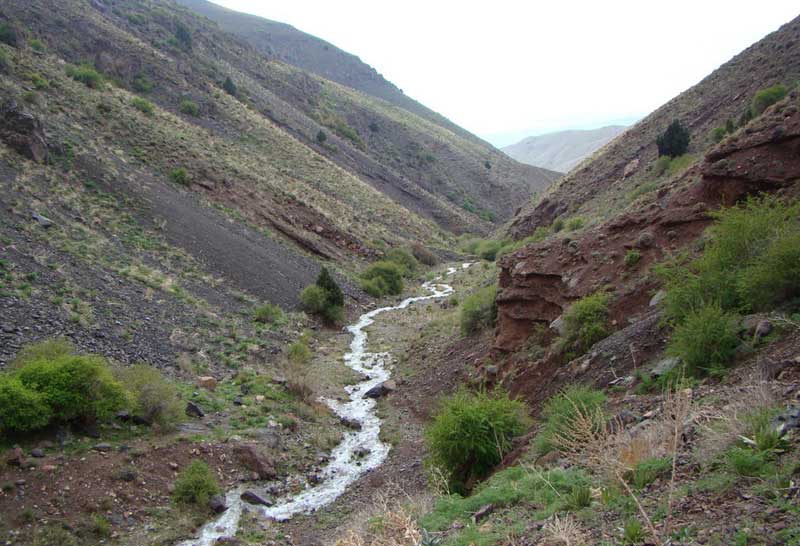
The waterfall itself is a straightforward cascade, roughly fifteen metres high, set in a narrow valley with good tree cover. The water drops over a rocky ledge into a clear pool at the base, and the pool is deep enough for a refreshing swim in summer when the weather is warm and the water is cold from the mountain snowmelt. The rocks around the waterfall are stained with minerals and covered in moss where the spray reaches, and the sound of the falling water echoes off the valley walls.
The surrounding forest is a mix of elm, oak, and wild pear trees, with undergrowth that is dense in the wetter areas near the stream. The trees provide shade along the trail and around the waterfall, making the visit pleasant even on warm summer days. The forest is part of the broader Alborz woodland that extends along the southern Caspian coast, though here at the eastern end of the range the vegetation is sparser and adapted to drier conditions than the lush Hyrcanian forests further west.
The valley around the waterfall is narrow and steep in places, and the trail from the village to the falls follows the stream for much of the way. The path is well-used and does not require special equipment, though it can be muddy after rain and involves some uneven ground near the waterfall. The walk is not long, but the scenery changes constantly as you move through the forest, with views of the stream, the trees, and occasional glimpses of the mountain peaks above.
Nekaraman Village and Its Orchards
The village of Nekaraman is a pleasant stop before or after the visit to the waterfall. The village is small, with old stone houses, a small mosque, and terraced gardens that grow walnuts, cherries, and apricots. The gardens are fed by the same mountain streams that supply the waterfall, and the orchards have been tended by local families for generations. In spring, the trees are in blossom and the gardens are green with new growth. In summer, the fruit ripens and the harvest begins. In autumn, the leaves turn gold and the air is cool and crisp.
The village has changed little over the centuries, and the traditional architecture of stone houses with flat roofs is still visible. The people of Nekaraman are known for their hospitality, and visitors are welcome to walk through the village and see the gardens, though it is polite to ask permission before entering private property. The village has no tourist infrastructure, no shops or cafes catering specifically to visitors, and the experience is authentic and uncommercial.
The terraced gardens around the village are a feature of the landscape, creating a pattern of cultivation that follows the contours of the mountain. The terraces are held by stone walls, and the soil is rich from centuries of organic matter and irrigation. The combination of the terraces, the orchards, and the traditional houses creates a landscape that is both productive and beautiful, a testament to the skill of the people who have lived here and made the mountain slopes fertile.
How to get there
From Shahroud, drive thirteen kilometres along the Shahroud-Majan road, then turn onto the side road leading to Nekaraman village. The road to the village is paved for most of the way, though the final section may be rough in places. From the village, the trail to the waterfall is three kilometres and does not require special equipment. The path is well-marked and used daily by locals, so navigation is straightforward.
Open Mehyar and choose Taxi from Shahroud for a direct ride to the village and waterfall. The drive from Shahroud to Nekaraman village takes about thirty to forty minutes, depending on road conditions. From Tehran, take the eastern highway towards Semnan and Shahroud. The total drive takes about five hours, and the route passes through the cities of Semnan and Damghan before reaching Shahroud.
Mehyar Buses connects Shahroud to Tehran, Mashhad, and other cities along the main highway. If you are coming from another city, you will need to reach Shahroud first and then take a taxi or local transport to Nekaraman village. Public transport to the village itself is limited, so a taxi or private car is the most practical option for the final leg.
If you are driving yourself, parking is available near the village, and from there the trail to the waterfall is a short walk. The road from Shahroud to the village is signposted, and the turnoff from the main road is clear. In winter, the road may be snowy or icy, so check conditions before setting out and consider using a vehicle with good traction.
The visit takes two to three hours, including time to walk from the village to the waterfall, spend time at the falls, and return. The trail is not long, but the scenery is worth lingering over, and many visitors spend time swimming in the pool or sitting on the rocks around the waterfall.
Best time to visit
Spring and early summer, from April to June, bring the highest water flow and the freshest greenery. The snowmelt from Shahvar Mountain feeds the stream at its fullest, and the forest is at its most vibrant. The weather is warm but not hot, and the waterfall is a cool retreat from the summer heat.
Autumn, particularly September and October, offers pleasant temperatures and golden foliage. The orchards around the village are harvested, and the air is crisp and clear. The waterfall flow is lower than in spring, but the colours and the weather make it a pleasant time to visit.
Winter brings snow and cold, making the access road difficult and the trail to the waterfall icy. The waterfall continues to flow, and the sight of water falling through a snowy landscape has its own beauty, but the visit requires warm clothing and careful footing. Check local conditions before setting out in winter, and consider going with a guide who knows the trail.
Practical tips
The visit is free and the waterfall is accessible at all times. There are no entrance gates or formal opening hours. Bring water and a light snack, as there are no shops on the trail. The village may have small shops where you can buy basics, but it is better to bring what you need from Shahroud.
The trail is easy to moderate in difficulty. It does not require special equipment, but sturdy shoes are recommended, as the path can be muddy and uneven near the waterfall. Children can manage the walk with supervision, and older visitors should take care on the wetter sections near the falls.
Swimming in the pool at the base of the waterfall is possible in summer, though the water is cold from the mountain snowmelt. The pool is deep enough for swimming, but the rocks around the edge can be slippery, so take care when entering and exiting the water.
Photography is good in all seasons, with the best light in the morning when the sun is behind the eastern peaks and the valley is in soft shadow. The waterfall itself is photogenic from multiple angles, and the forest around the falls provides a green backdrop that contrasts with the white water.
Combine the visit with other attractions in the area if you have time. Shahroud itself has several historical sites, and the city is a gateway to the eastern Alborz mountains. The Kalute desert formations to the south of Shahroud are a striking contrast to the forested mountains to the north, and the two landscapes can be visited in the same day if you have a car. The city of Mashhad, with the Imam Reza Shrine, is about three hours' drive to the east.