
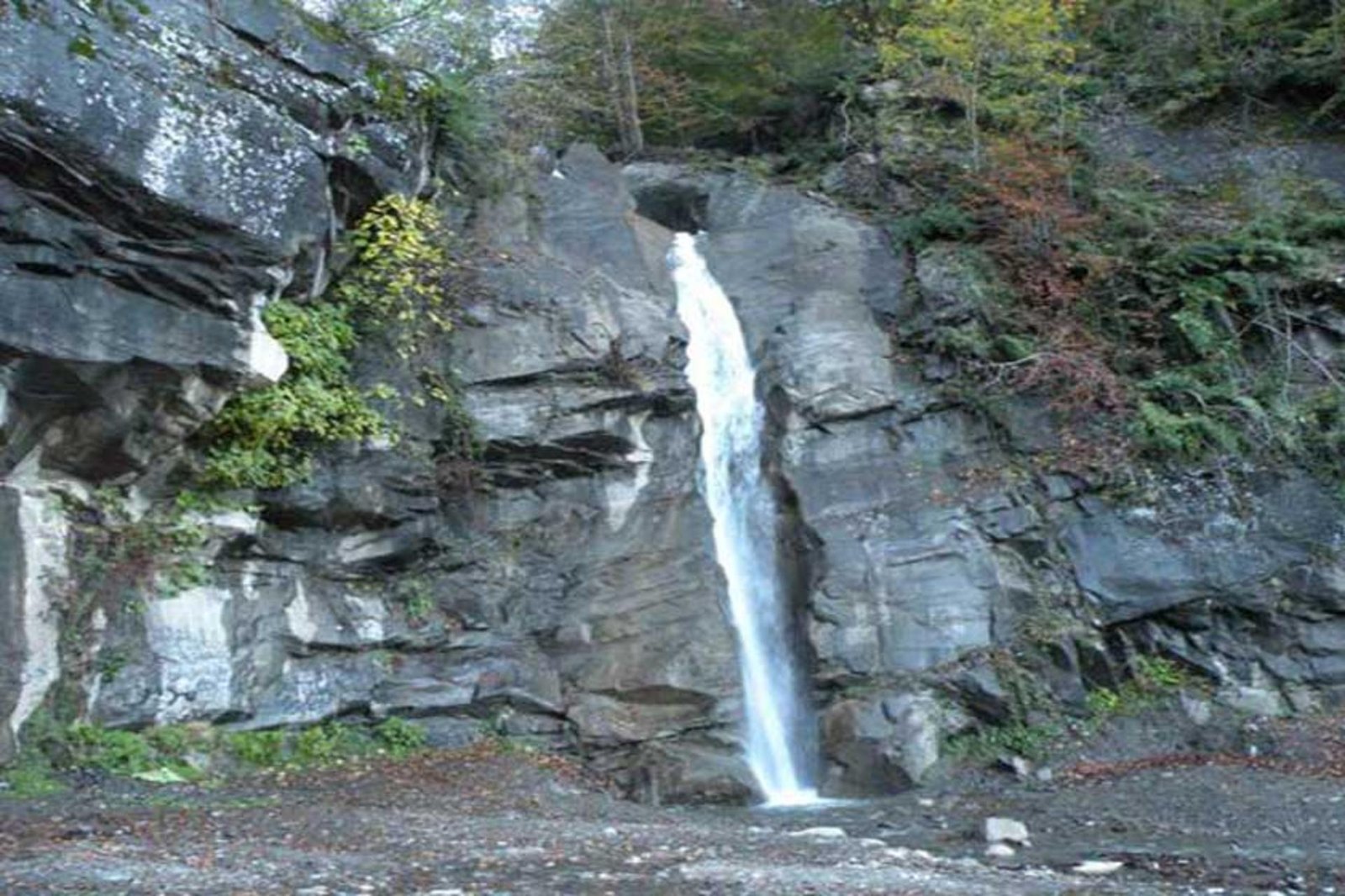
Deep in the forested foothills above Ramsar, a waterfall pours with such force that the rock behind it has hollowed into a cavern wide enough to stand inside. Locals call it Deh Qolu, the Ten Cascades, because the stream above the main drop breaks into a series of smaller falls that tumble over mossy ledges before the final plunge. The surrounding woodland is Hyrcanian forest, a UNESCO-listed ancient ecosystem that clings to the southern shore of the Caspian Sea and has survived here, more or less unchanged, since the last ice age. Reaching the waterfall means a short but steep hike from Ej village, a walk that passes through beech, oak, and hornbeam canopy thick with birdsong and the sound of running water long before you see the falls themselves.
Where is Ej Waterfall?
The waterfall sits in the Ramsar County area of Mazandaran province, a short distance above Ej village in the Alborz foothills. Ramsar itself is a Caspian Sea resort city in northern Iran, roughly 220 kilometres from Tehran by the Chalus Road and about four hours by car in good conditions. The town is known for its hot springs, its palace built for the last Shah, and its position at the western end of the Hyrcanian forest belt. Ej village lies inland and uphill from the coastal plain, reached by a narrow road that climbs through tea plantations and rice paddies into dense woodland.
The Ten Cascades
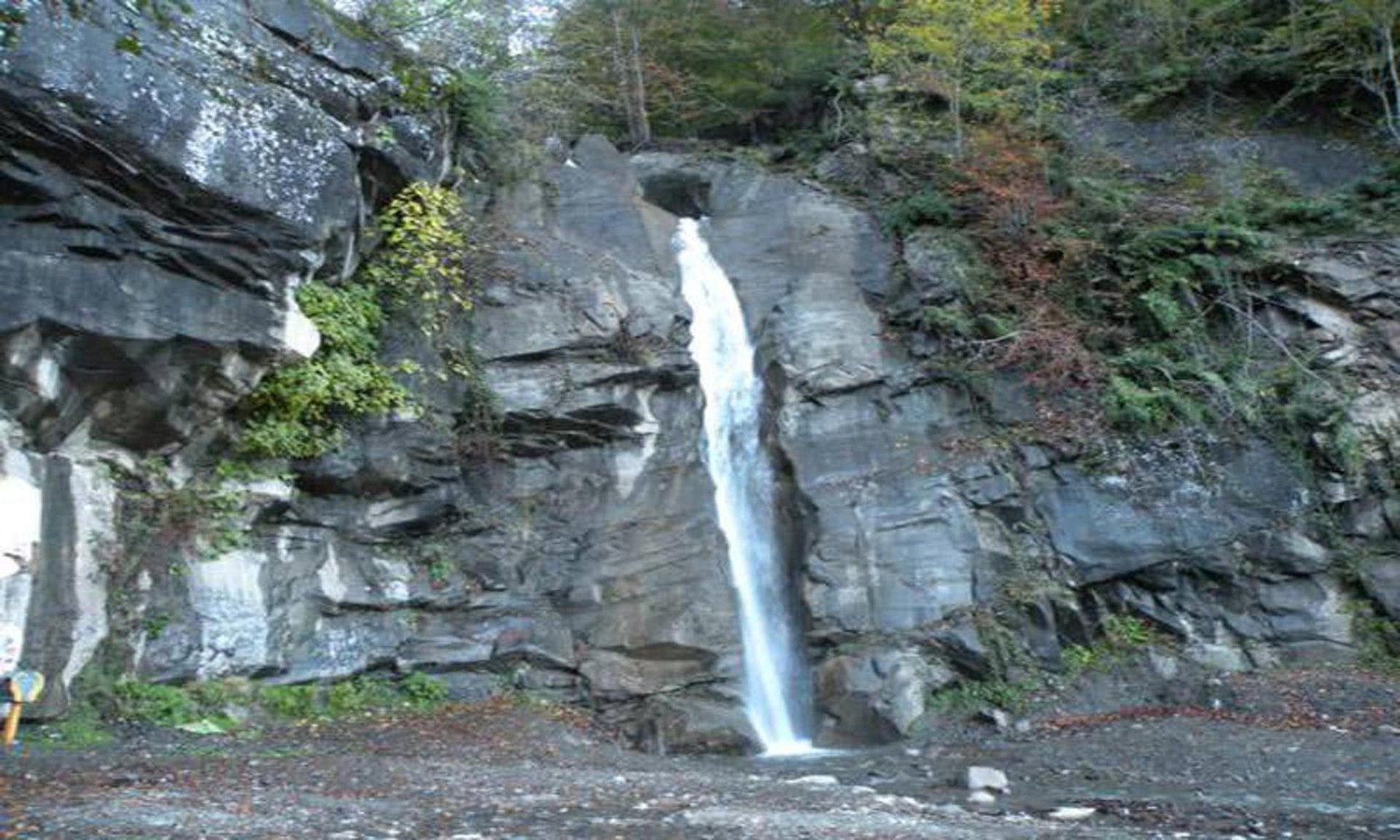
The name Deh Qolu, or Ten Cascades, is not a count of exactly ten separate falls. It describes the way the river fractures over a series of rock steps in the final stretch before the main drop, each step throwing up a curtain of white water that catches the light differently depending on the season and the time of day. The main waterfall itself is a single powerful cascade that hits a rock face and then disappears into a pool below. What makes Ej unusual is the cavern behind the falling water. Centuries of erosion at the base of the cliff have carved out a hollow space, large enough for several people to stand sheltered from the spray, where you can look outward through the curtain of water at the forest beyond.
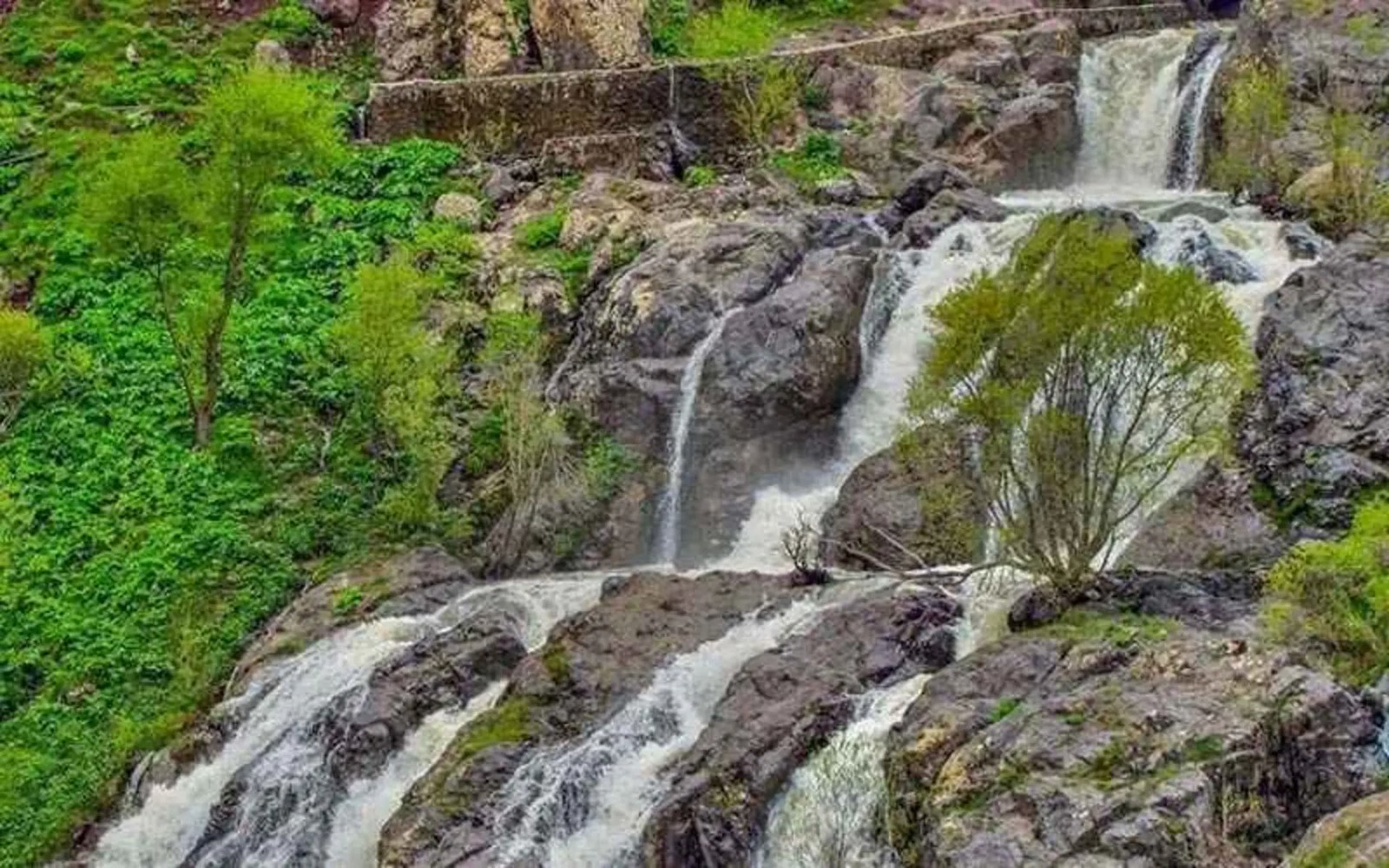
The stream above the falls is fed by mountain springs and snowmelt from the Alborz peaks, which means the flow stays strong even in late summer when smaller waterfalls in the region dry to a trickle. The water is cold and clear, and the pool at the base is deep enough that visitors sometimes wade in during warm months, though the rocks are slippery and the current near the fall is strong.
The Hyrcanian Forest Trail
The trail from Ej village to the waterfall takes roughly thirty to forty-five minutes on a well-used path that climbs steadily through mature forest. The trees here are predominantly oriental beech, with hornbeam, oak, and alder in the wetter sections near the stream. Hyrcanian forest, also called Caspian forest, is a relict ecosystem. During the last ice age, glaciers advanced across most of Europe and western Asia, but the Alborz mountains created a rain shadow that kept this narrow strip along the southern Caspian coast ice-free. The forests that survived are now some of the oldest deciduous woodlands on Earth, home to species that vanished elsewhere thousands of years ago.
Walking the trail, you are likely to hear birds before you see them. The forest supports a rich avian population, including woodpeckers, nuthatches, and the Caspian tit, a small bird found only in these forests. Mammals are more elusive but present: wild boar, jackal, and occasionally deer move through the undergrowth, and the area has been documented as habitat for the endangered Persian leopard, though sightings are rare.
The path is muddy in places, especially after rain, and involves some rocky steps near the waterfall itself. Sturdy shoes are more useful than sandals, and a walking stick helps on the steeper sections. In spring and early summer, the forest floor is thick with ferns and wildflowers, and the canopy is so dense that the light filtering through has a green, underwater quality.
How to get there
Open Mehyar and choose Taxi from Ramsar town to reach Ej village. The drive from central Ramsar to the village takes about twenty to thirty minutes on a paved road that climbs steadily from the coastal plain. From the village, follow the signed trail to the waterfall. The hike is well-marked and used daily by locals and visitors, so navigation is straightforward. Allow two to three hours for the full round trip, including time at the falls.
Mehyar Buses connects Ramsar to Tehran and other cities along the Caspian coast. If you are coming from Tehran, the Chalus Road (Road 59) is the most direct route, though it can be slow on weekends and holidays when the road fills with day-trippers heading to the coast. The Haraz Road (Road 77) via Amol is a longer but often faster alternative, especially in peak season.
If you are driving yourself, park near the village square. There is no formal car park, but space is available along the road. The trailhead is a short walk from the centre of the village, and locals can point you in the right direction if the signs are unclear.
Best time to visit
Spring, from April to May, and early summer in June bring the strongest water flow and the greenest forest. The snowmelt from the Alborz peaks feeds the stream at its fullest, and the beech canopy is at its most vivid. Autumn, particularly October, offers golden foliage and cooler hiking conditions, though the waterfall flow may be lower after a dry summer.
Winter is possible but not ideal. Ice forms on the trail and around the waterfall, making the rocks treacherous. The forest is still beautiful in snow, but the path requires careful footing and warm, waterproof clothing. If you visit in winter, check local conditions before setting out and consider going with a guide who knows the trail.
Practical tips
The visit is free and the waterfall is accessible at all times. There are no entrance gates or formal opening hours. Bring water and a light snack, as there are no shops on the trail. The village has small cafes where you can rest after the hike, and local families sometimes sell homemade food and tea near the trailhead on weekends.
The hike is moderate in difficulty. It is not a technical climb, but the trail is steep in sections and the final approach to the waterfall involves uneven ground and slippery rocks. Children and older visitors can manage it with care, but very young children should be supervised near the water.
Photography is excellent in all seasons. The cavern behind the waterfall offers a unique perspective, and the light filtering through the water creates interesting effects. Morning visits tend to have softer light in the forest, while afternoon sun can create rainbows in the waterfall spray. A waterproof phone case or camera bag is useful if you plan to stand behind the falls.
Combine the visit with other Ramsar attractions if you have time. The hot springs of Ramsar are a short drive away, and the Caspian Sea coast is accessible for a swim or a boat ride on the same day. The city of Ramsar itself has a palace, a beach promenade, and a weekend bazaar worth exploring.