
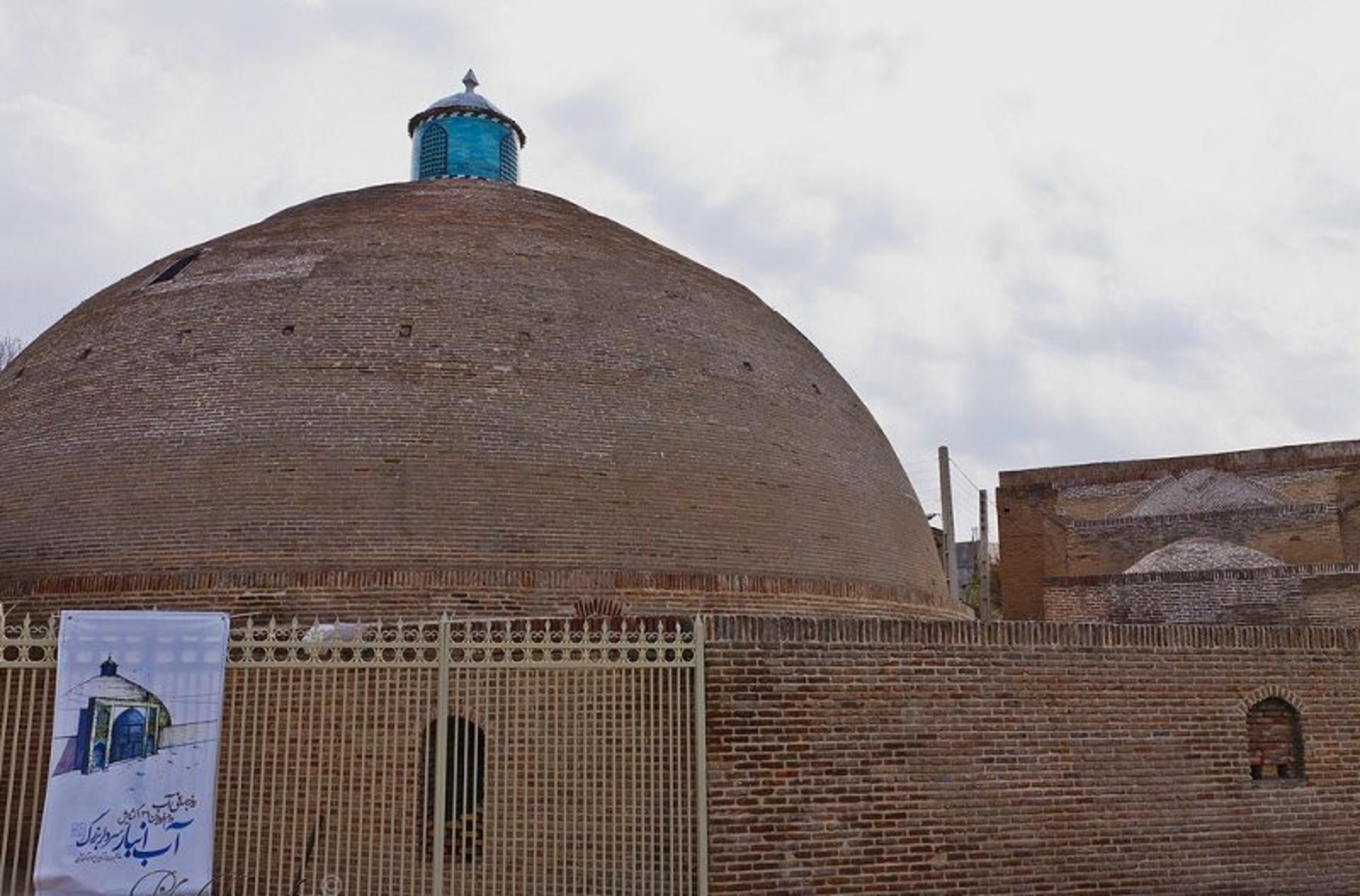
An ab anbar is a traditional underground water cistern, built across Iran's arid and semi-arid regions to store freshwater drawn from nearby qanats. These structures represent one of the most ingenious feats of ancient Iranian hydraulic engineering, keeping water cool and clean through the scorching desert summers. From Yazd and Kashan to Isfahan, Naeen, and Tehran, ab anbars once formed the lifeline of every neighbourhood. At the beginning of the twentieth century, the city of Qazvin alone counted 151 public ab anbars. Many survive today as protected heritage monuments, and some still function as they were designed to do centuries ago.
Origins and history
The ab anbar evolved alongside the qanat, the underground aqueduct system that has carried groundwater from mountain sources to the Iranian plateau for at least three thousand years. Where a qanat delivered more water than a community needed in the wet months, the surplus had to be stored for the dry season. The solution was the ab anbar: a sealed underground tank that kept water cool, dark, and protected from evaporation and contamination.
The earliest ab anbars likely date to the pre-Islamic period, but the form reached its peak during the Safavid and Qajar eras, when Iran's desert cities were at their largest and most prosperous. Merchants, governors, and religious endowments funded the construction of ab anbars as public works, and the finest examples feature elaborate ornamental portals, intricate windcatchers, and interiors lined with a waterproof mortar called sarooj.
How an ab anbar works
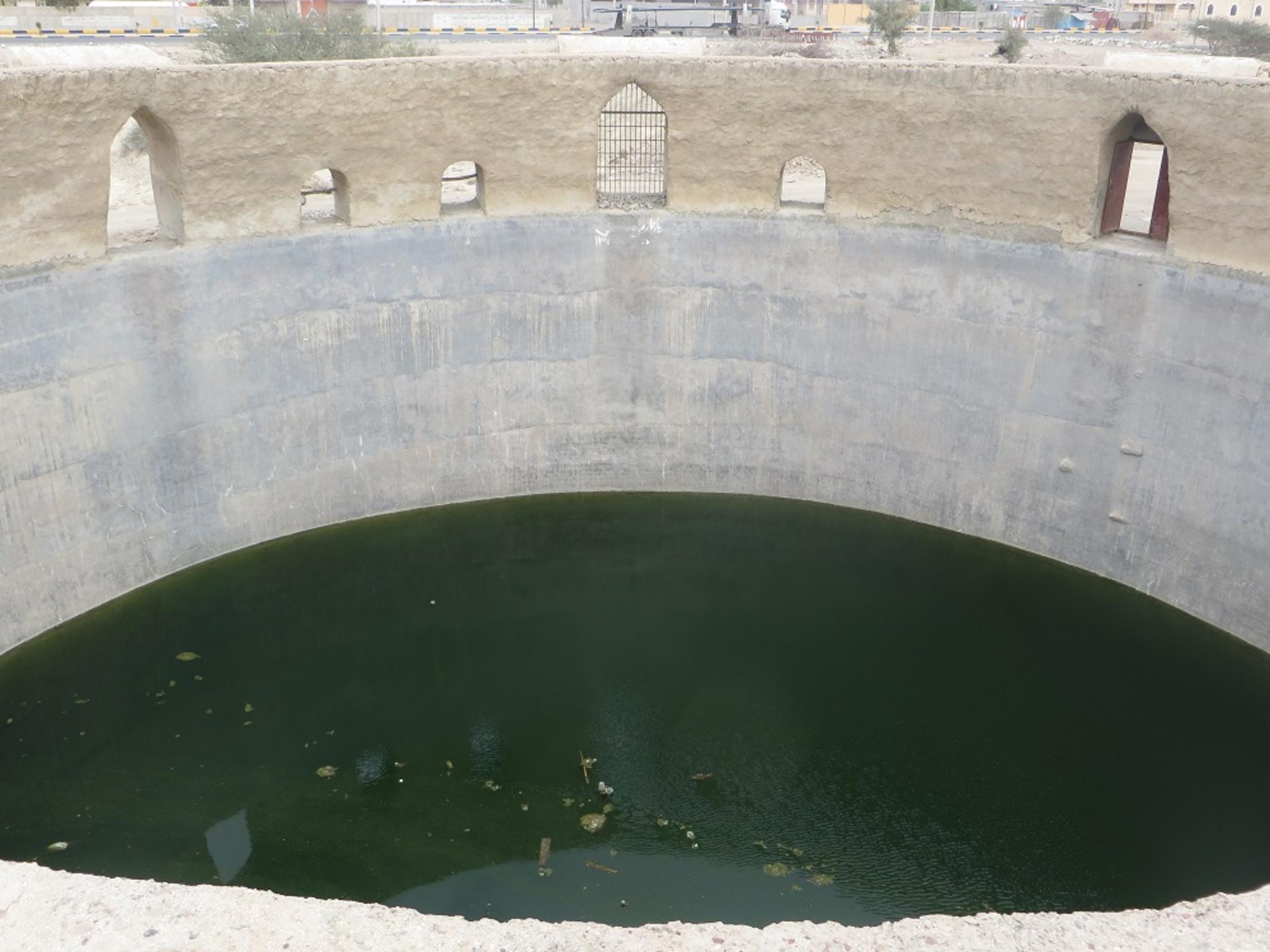
An ab anbar consists of several key parts, each designed for a specific function. The storage tank, or makhzan, is a large underground chamber whose dimensions varied depending on the qanat's discharge and the community's demand. The tank was typically lined with sarooj, a combination of lime, clay, and chipped straw that cemented the bricks or stones together and provided remarkable resistance to water penetration and heat.
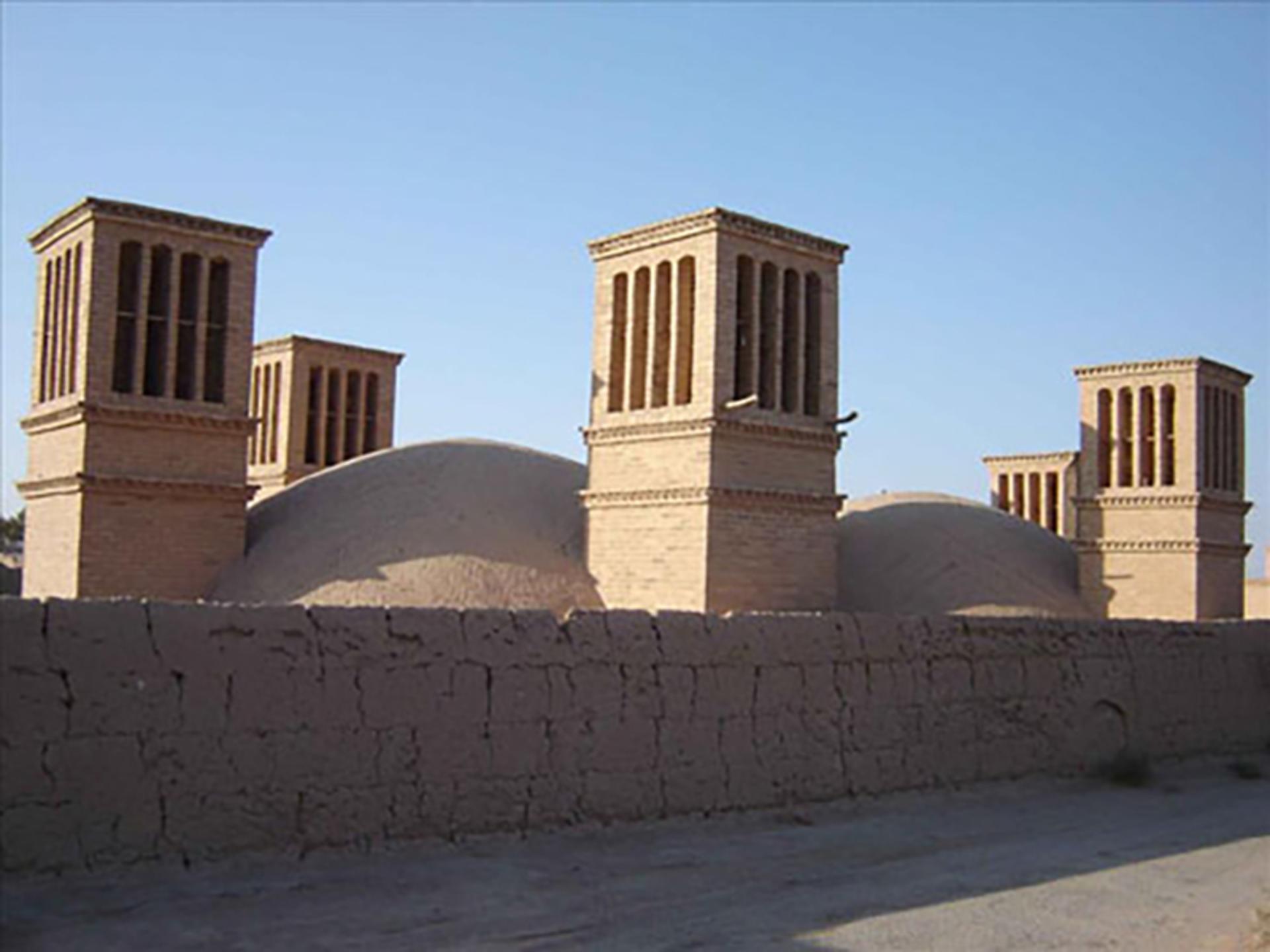
Above the tank, one or more windcatchers, known as badgirs, rise above ground level. These towers catch passing breezes and funnel cool air down into the space above the water, lowering the temperature and preventing stagnation. In cities like Naeen, where multiple windcatchers were employed, water temperatures inside the ab anbar could drop to near freezing even during the height of summer. The dome-shaped roof above ground insulated the tank from the extreme desert heat.
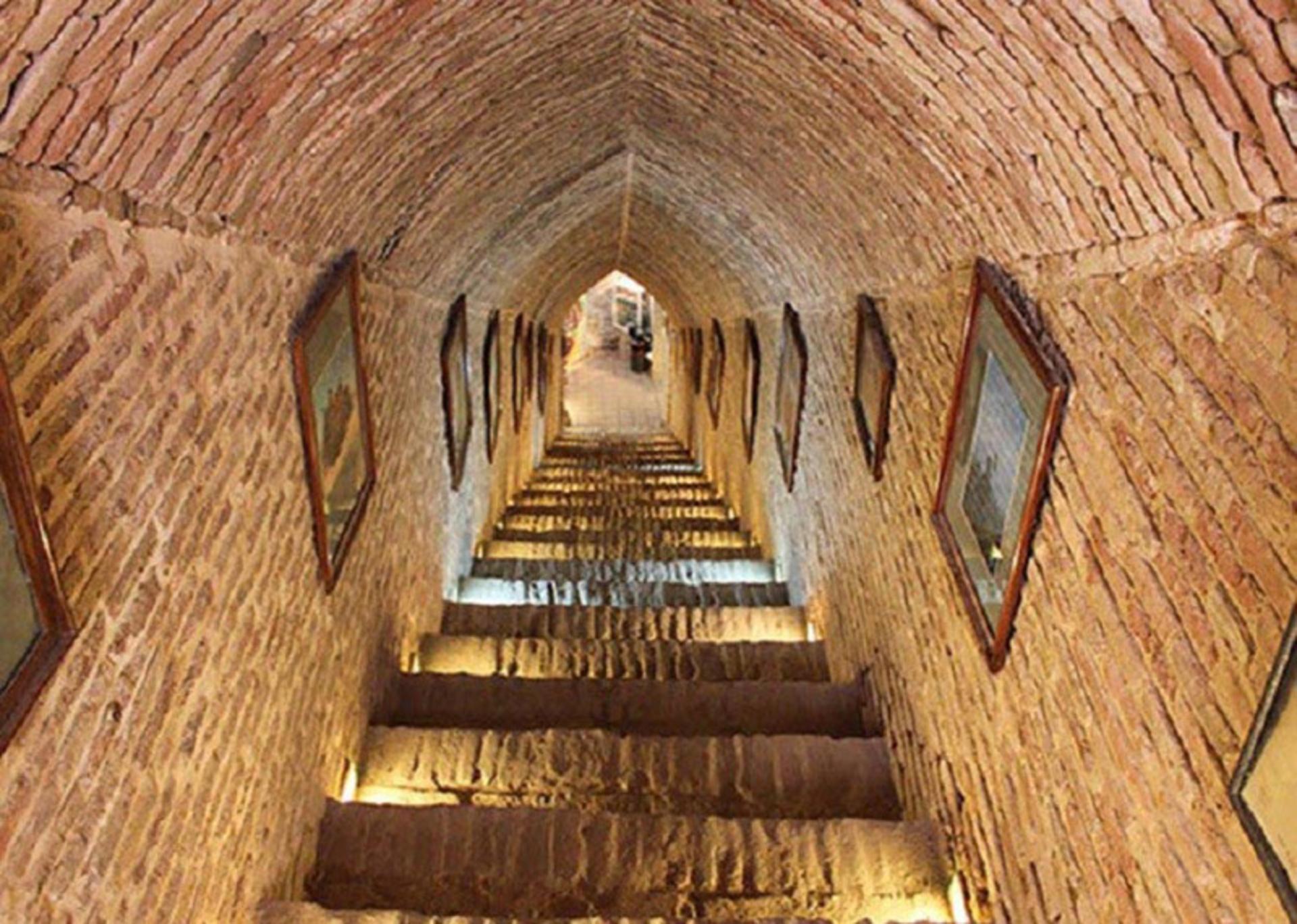
Water entered the cistern through a channel connected to a qanat. A stairway led from ground level down to the water tap at the bottom of the tank, allowing people to fill their containers. Some ab anbars also featured an ornamental portal at the entrance, decorated with tilework or carved stone, reflecting the importance of the structure in community life.
Where to see ab anbars
The most famous examples are found in Yazd, a city that owes much of its survival to the ab anbar system. The ab anbar of Haj Aqa Ali, with its single massive windcatcher, is one of the best known. The ab anbar of Shesh Badgireh, literally "Six Windcatchers", lives up to its name with six towers rising above the roof, creating a striking silhouette against the desert sky. Both are open to visitors.
In Kashan, several restored ab anbars sit along the historic neighbourhoods, and the city's famous Qanat of Chashmeh-i Soleiman once fed cisterns where water temperatures in midsummer stayed around 25 degrees Celsius. Isfahan's ab anbars are scattered around the old city, though many have been repurposed or fallen into disuse. In Tehran, the ab anbar of Qolam-Hossein near the Grand Bazaar is one of the best-preserved examples in the capital.
Beyond these major cities, ab anbars can be found in Naeen, Zavareh, Qazvin, Shiraz, and many smaller towns across the central plateau. Iran still has around 30,000 active qanat systems today, and wherever a qanat flows, an ab anbar may be nearby.
The social role of the ab anbar
Beyond their engineering brilliance, ab anbars played a central role in the social life of Iran's desert cities. They were not merely utilitarian structures but community landmarks, places where people gathered to collect water, exchange news, and escape the midday heat. The finest ab anbars, with their ornate portals and soaring windcatchers, were sources of civic pride, and their construction was often funded by religious endowments or wealthy merchants as an act of public charity.
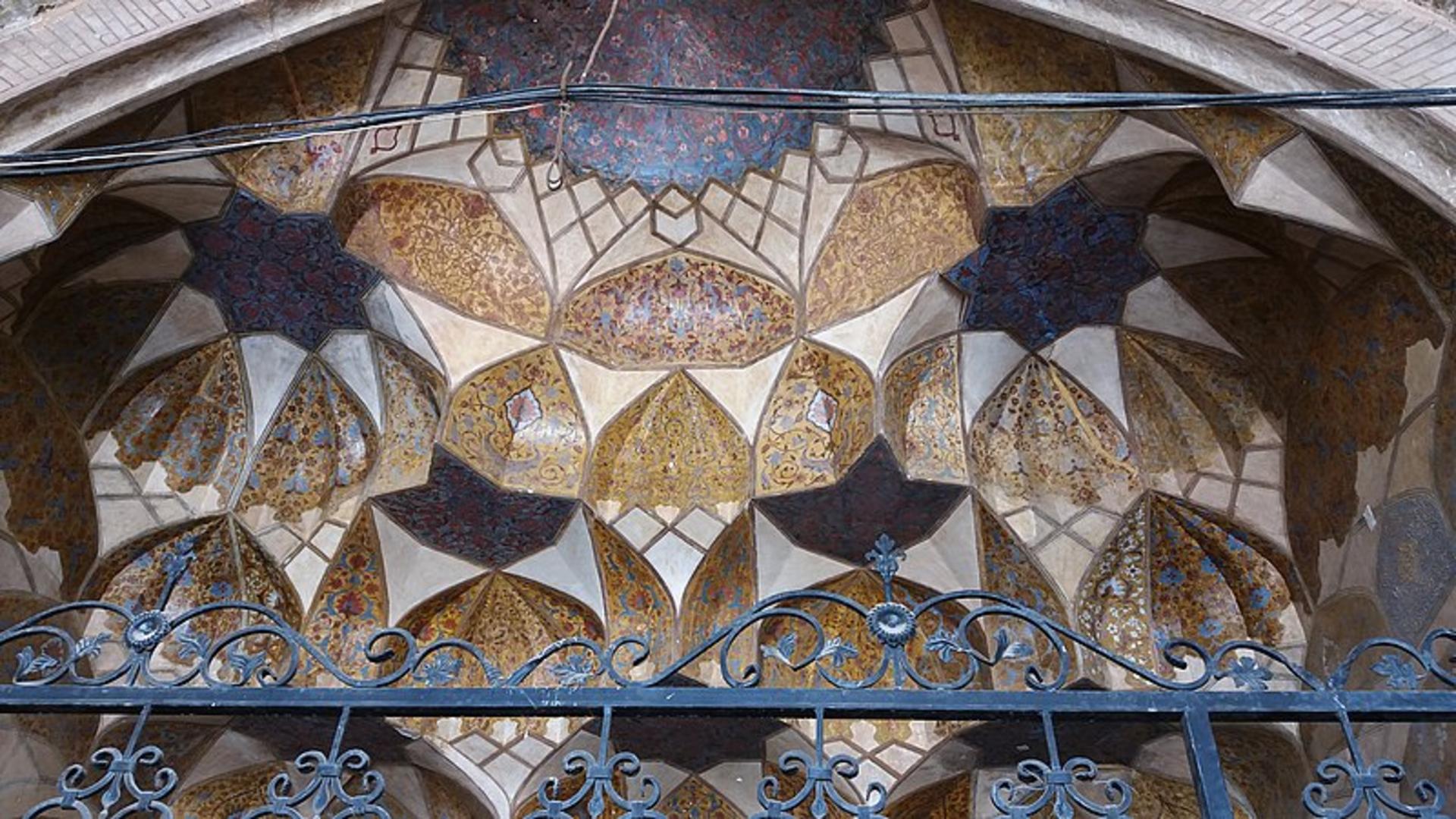
In cities like Qazvin and Yazd, the ab anbar was as much a part of the neighbourhood's identity as the mosque or the bazaar. Children played in the cool air that rose from the windcatchers, and women gathered at the water taps in the early morning and evening, turning the daily task of collecting water into a social occasion. With the arrival of modern plumbing in the twentieth century, most ab anbars fell into disuse, but they remain powerful symbols of the ingenuity and communal values that sustained life in the desert.
Getting there
Open Mehyar and choose Taxi to visit any ab anbar site in Yazd, Kashan, or Isfahan. For a guided experience, Mehyar Taxi can take you to multiple heritage water structures in a single day. Mehyar Buses connects all the major desert cities where these structures are found. If you are planning a multi-city tour of the desert plateau, consider combining Yazd, Kashan, and Isfahan into one itinerary, as the distances between them are manageable.
Best time to visit
Autumn, from September to November, and spring, from March to May, are the most comfortable seasons for exploring desert cities and their underground structures. Summer is extremely hot in these regions, with daytime temperatures in Yazd and Kashan regularly exceeding 40 degrees Celsius, though the underground cisterns themselves remain cool year-round.
For travellers interested in Iran's ancient water systems, the ab anbar is a natural complement to a visit to the qanats themselves. The Ebrahim Abad Historical Qanat offers another window into the engineering that made life possible in the desert.