
Most travelers arrive at Pasargadae expecting a single tomb in an empty plain. They leave having walked through the birthplace of an empire. Set on the Morgab plain in Fars province, roughly halfway between Shiraz and Isfahan, this UNESCO World Heritage Site was the first dynastic capital of the Achaemenid Empire, founded by Cyrus the Great in the sixth century BC. Its palaces, gardens, and the quiet limestone tomb of Cyrus himself make up one of the most important archaeological landscapes in Iran.
This guide covers everything you need to plan the visit: where Pasargadae is, how to reach it from Shiraz, what to see inside the site, current ticket and opening-hour norms, the best season to go, and how to pair it with Persepolis, Naqsh-e Rostam, and the rest of a classic Fars itinerary.
Where is Pasargadae?
Pasargadae sits in the Pasargad county of Fars province, in the Morgab plain, about 130 kilometers northeast of Shiraz and roughly 20 kilometers beyond the small town of Saadat Shahr, just off the main Shiraz to Isfahan road. The site lies north of the highway, so you leave the main road at a marked turnoff and follow a short secondary road past the village of Madar-e Soleyman to the entrance gate.
The location was not accidental. Cyrus chose this plain because it lay near the site of his victory over the Median king Astyages in 550 BC, and because the surrounding mountains, the Polvar river, and the narrow Bolaghi gorge gave the area both water and natural defense. In antiquity the whole plain was a royal park, dotted with palaces, pavilions, and water channels.
How to get to Pasargadae
The most comfortable way to reach Pasargadae is by private car or taxi from Shiraz. The drive covers about 130 to 135 kilometers and takes roughly one hour and forty minutes to two hours depending on traffic leaving the city and stops along the way. Open Mehyar, choose Taxi, and set Pasargadae as your destination. You can book a one-way ride or, more usefully, arrange a driver for the whole day so that Pasargadae, Persepolis, and Naqsh-e Rostam fit into a single loop. A day-hire through Mehyar Taxi is the simplest option for travelers who want to control their own timing rather than join a group tour.
If you are traveling by your own car, leave Shiraz on the Shiraz to Isfahan highway, pass Marvdasht, continue toward Saadat Shahr, and watch for the Pasargadae turnoff about 20 kilometers beyond the town. After the turn, the road leads past Madar-e Soleyman village to the site gate; the last stretch is about four kilometers and is well signposted.
Public transport exists but is slow. From Shiraz, buses and shared taxis run from the main terminals to Saadat Shahr, and from there you would need a local taxi for the final 20 kilometers. This works, but it eats most of a day and leaves little flexibility. For most visitors, a Mehyar Taxi day-hire from Shiraz is both faster and cheaper than assembling the trip piece by piece.
A short history of the first Achaemenid capital
Cyrus the Great founded Pasargadae in the sixth century BC after his victory over the Medes, and it served as the dynastic capital of the young Achaemenid Empire. From here, Cyrus went on to conquer Lydia, Babylon, and much of the ancient Near East, building the first great multicultural empire in Western Asia. His policy of respecting local religions and customs is remembered in the biblical account of his decree allowing the Jews of Babylon to return to Jerusalem.
The site takes its name from the Persian tribe, the Pasargadae, from whom the Achaemenid line descended. Greek writers such as Herodotus called the place Patragada, and later Persian sources knew the plain as Murghab. After Cyrus died in 530 BC, his son Cambyses and later Darius I continued to use Pasargadae as a dynastic center, although Darius built a new ceremonial capital at Persepolis some 70 kilometers to the south. Pasargadae remained important until Alexander the Great conquered the empire in 330 BC; ancient sources say Alexander visited the tomb of Cyrus and ordered it restored.
In the Islamic period the tomb was reinterpreted as the Tomb of the Mother of Solomon, and a small mosque was built around it using columns taken from the Achaemenid palaces. European travelers from the fifteenth century onward described the site, but it was not until the early twentieth century that scholarship confirmed the identity of the tomb and the extent of the royal city. Pasargadae was inscribed on the UNESCO World Heritage List in 2004 as the fifth Iranian site on the list, recognized for its palaces, gardens, and the tomb of Cyrus as an outstanding example of the first phase of Achaemenid royal art and architecture.
What to see at Pasargadae
The site is large, around 160 hectares in its core zone, and the monuments are spread across the plain and the hills. Give yourself at least two to three hours, more if you are interested in archaeology or photography.
The Tomb of Cyrus the Great
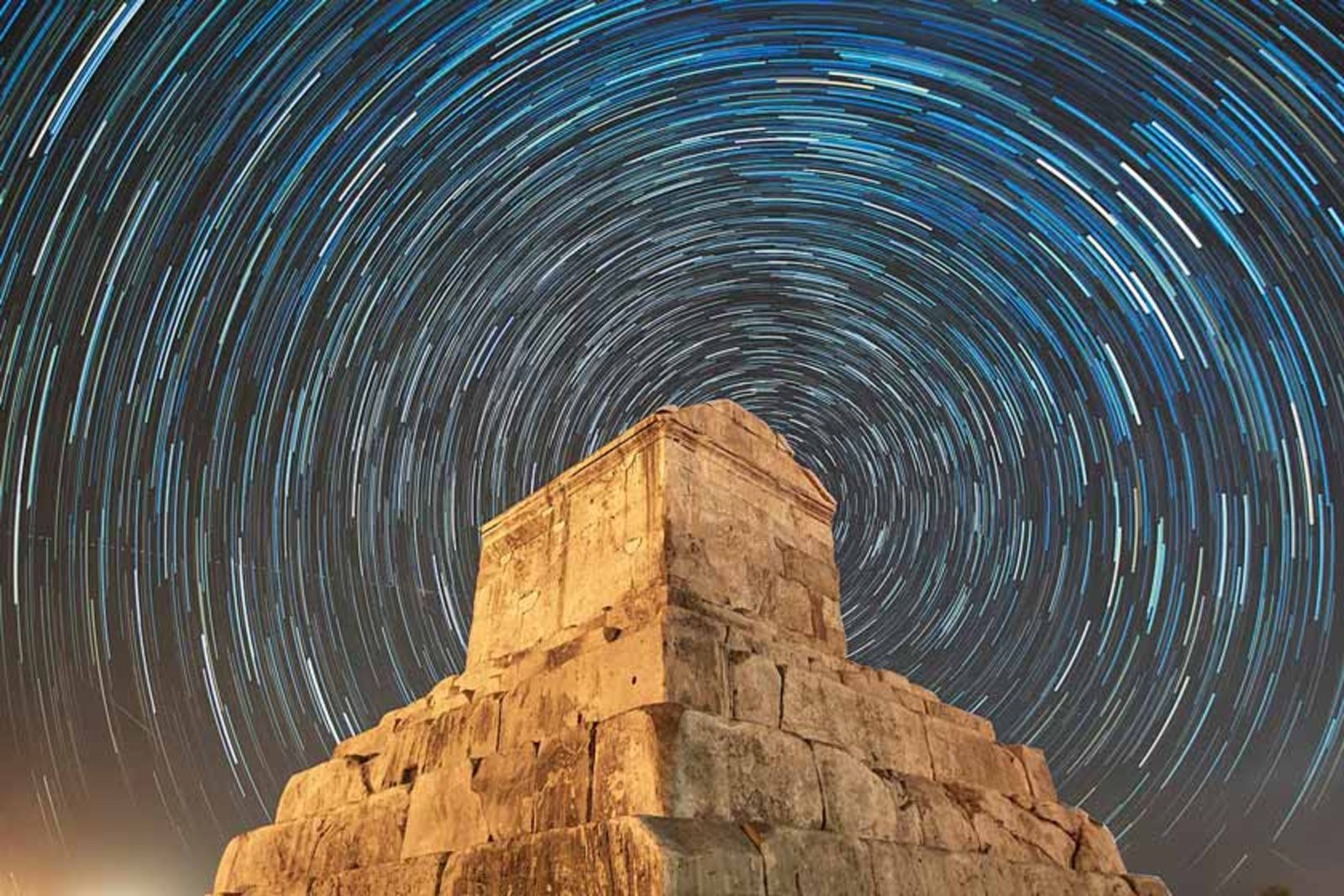
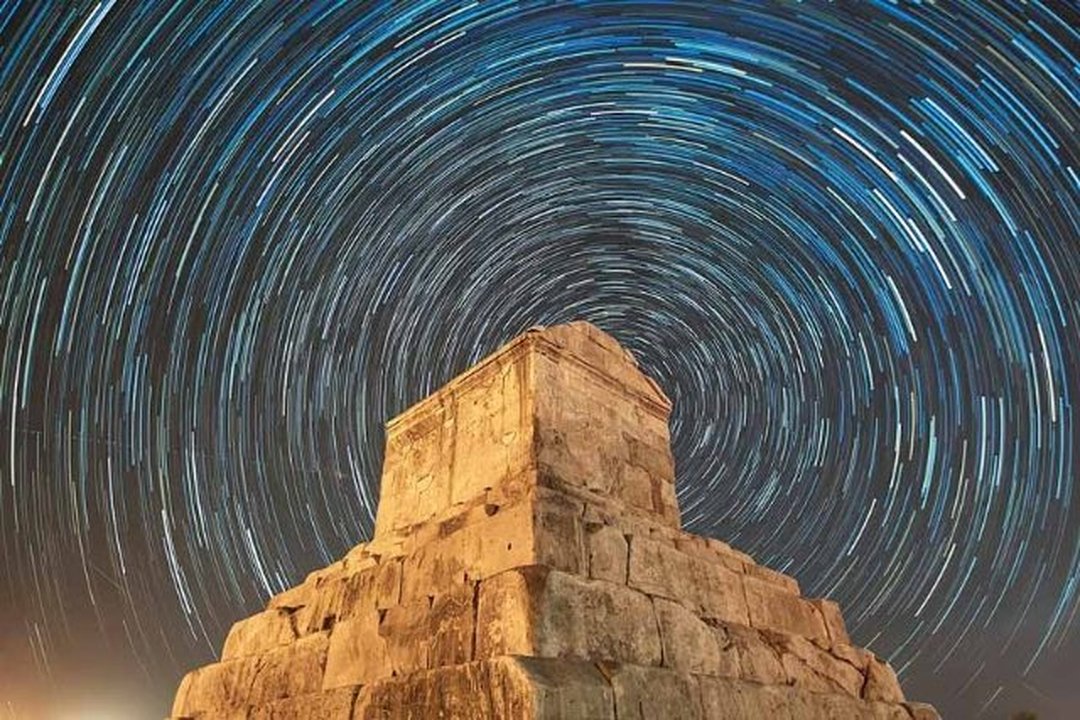
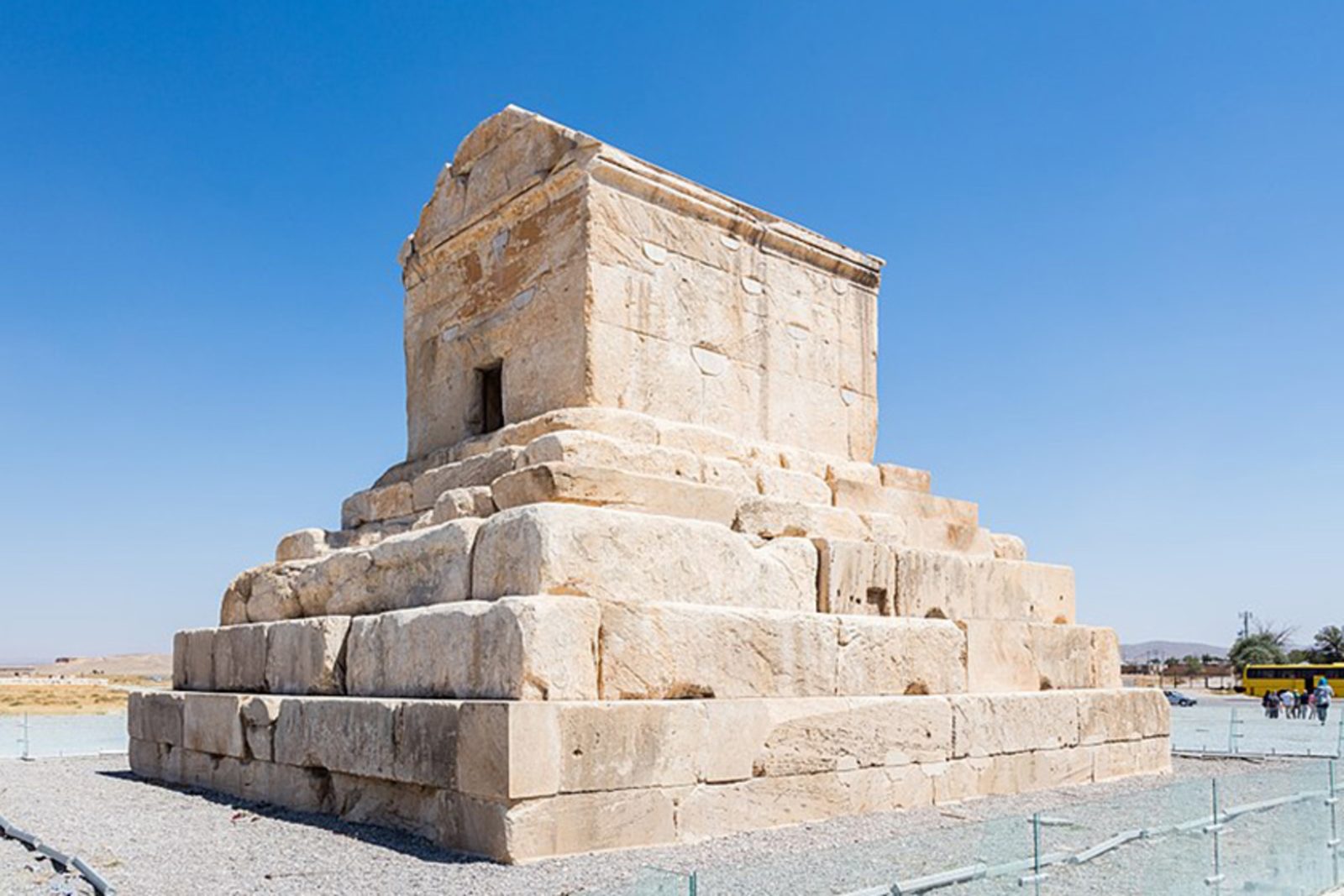
The tomb is the most famous monument at Pasargadae and the reason most travelers come. It is a compact structure of white limestone, built around 540 to 530 BC, with a gabled burial chamber set on a six-stepped plinth. The base measures roughly 13 by 12 meters, and the whole monument stands about 11 meters high. The architecture blends Iranian, Mesopotamian, Greek, and Egyptian elements, and the stepped form has often been compared to a ziggurat.
For centuries the tomb was known locally as the Tomb of the Mother of Solomon, and a mosque once stood around it. The prayer niche, or mihrab, that was carved into the burial chamber during the Islamic period is still visible, a reminder of how many layers of history this single building carries. The tomb stands slightly apart from the palace area, about a kilometer away, and its isolation on the open plain is part of what makes it so striking.
The royal palaces
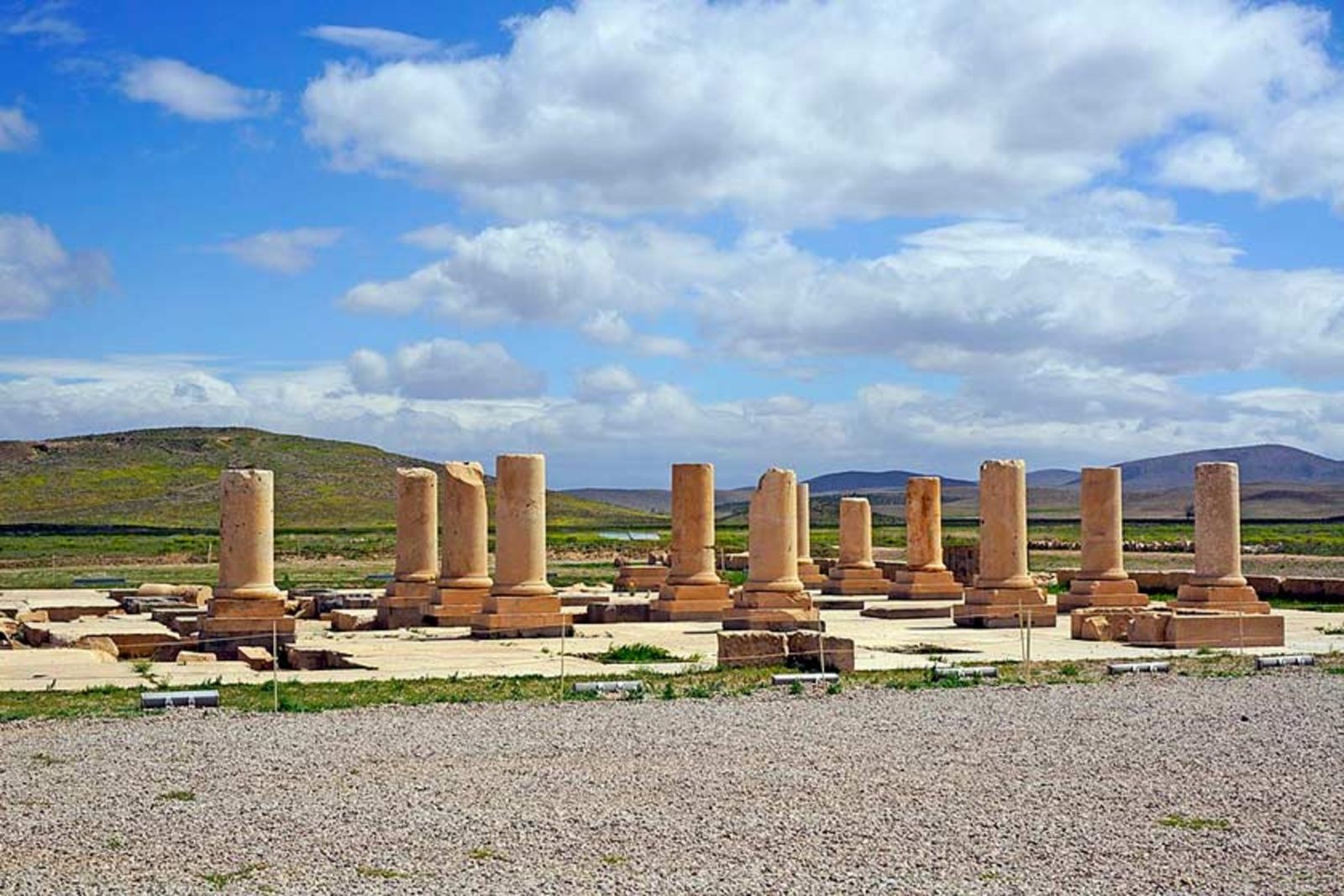
The palace complex lies in the center of the site and includes three main structures: the Gate Palace, the Audience Palace, and the Residential Palace.
The Gate Palace, also called Palace R, covered about 726 square meters, with a hall of roughly 686 square meters supported by eight stone columns that once rose about 16 meters. It closely resembles the Gate of All Nations at Persepolis and served as the ceremonial entrance to the royal complex. On one of the surviving doorjambs you can still see the famous Winged Man relief, a four-winged figure in prayer, which is the best-preserved stone carving at Pasargadae.
The Audience Palace, or Palace S, covered about 2,472 square meters. It had a large hall with eight columns, four porticos, and two side rooms. Only one column still stands, reaching about 10 meters today, but the black limestone doorways and the carved figures of lions, bulls, and hybrid creatures on the reliefs give a strong sense of the original grandeur. One of the oldest trilingual cuneiform inscriptions in Iran, in Old Persian, Elamite, and Babylonian, is carved above one of the doorways and reads, in essence, "I am Cyrus, the Achaemenid king."
The Residential Palace, or Palace P, covered about 3,192 square meters and is thought to have been Cyrus's living quarters. It had a central hall with east and west porticos and was built with white marble-like limestone, black limestone, and bluish sandstone. Reliefs on the doorways show the king with attendants, and another trilingual inscription appears above one of the doors.
Tall-e Takht and the Stone Tower
Tall-e Takht, also known as the Throne of Solomon, is a massive fortified terrace on a hill at the northern edge of the site. It was begun under Cyrus and continued under Darius, using large, regularly cut limestone blocks assembled with a dry-joint technique. The platform is roughly 98 by 79 meters in plan and was originally about 15 meters high. It later served as a citadel and, in the Islamic period, as a fort.
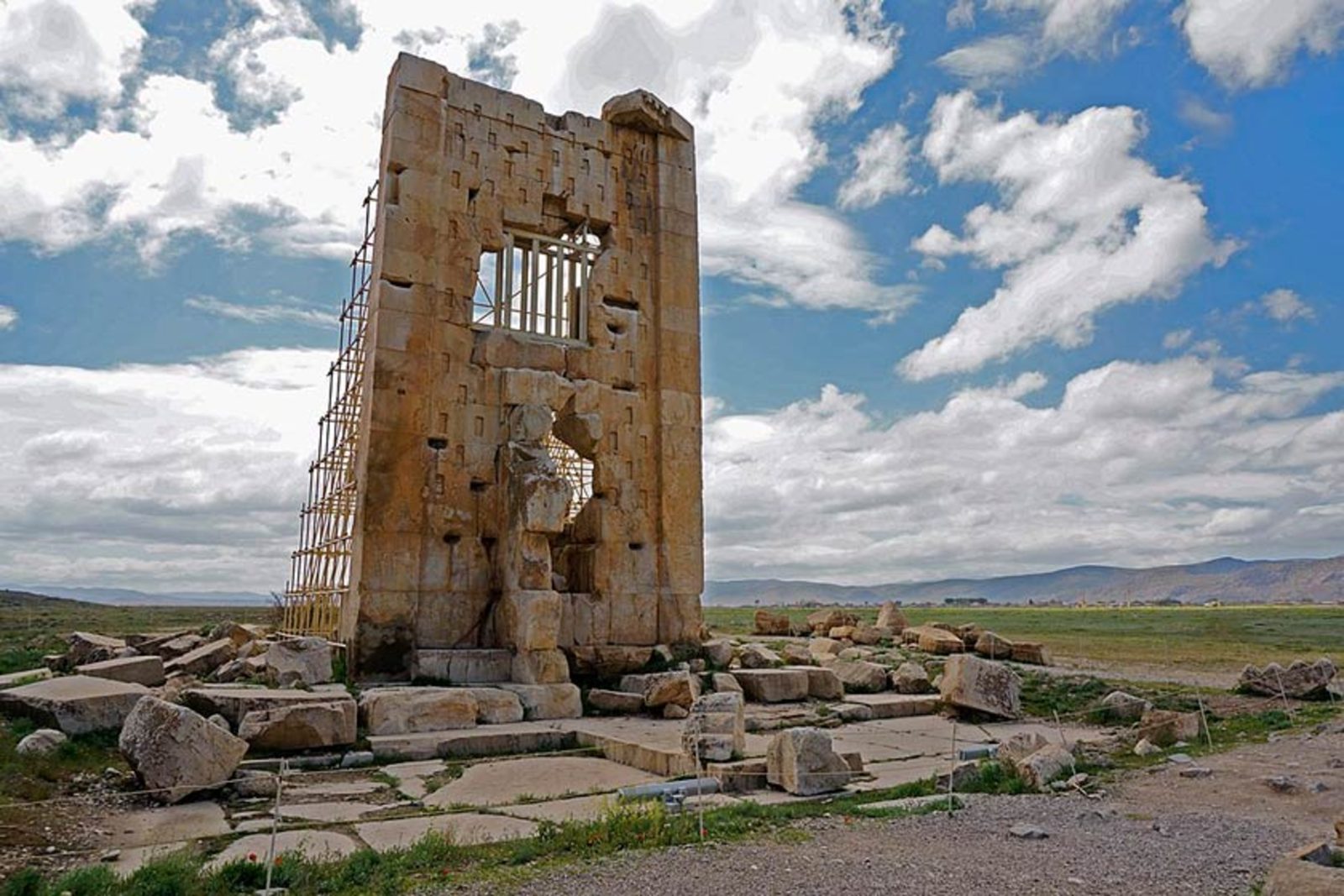
The Stone Tower, sometimes called the Prison of Solomon or the Tomb of Cambyses, is a square tower about 14 meters high, of which only one wall remains. Its original function is still debated. Some scholars see it as a tomb, others as a fire temple or a treasury archive. It resembles the Ka'ba-ye Zartosht at Naqsh-e Rostam but is older.
The Royal Garden and other remains
Pasargadae is also significant for its garden layout. The "Four Gardens" plan created here, with water channels dividing the space into four quadrants, became a prototype for later Persian garden design and influenced architecture as far away as Mughal India and Safavid Isfahan. Traces of the water channels and the garden pavilions are still visible.
Elsewhere on the site you can find the sacred precinct, the Mozaffari caravanserai from the 14th century, the remains of the Atabaki mosque, and several unexcavated mounds within the buffer zone. There is also a small site museum near the tomb that displays finds from the excavations.
Tickets, hours, and practical notes
Pasargadae is open every day except major national mourning holidays, such as Ashura and Tasua. As a general guide, the site opens around 08:00 in the morning. In spring and summer it closes around 19:00, and in autumn and winter around 17:00 to 17:30. The ticket office closes about an hour before the site. Hours and holiday closures can change, so confirm before you travel.
Foreign visitors pay a higher ticket price than Iranian nationals. In recent seasons this has been in the range of a few million rials per foreign adult, roughly equivalent to ten to fifteen US dollars depending on the exchange rate. There is no reliable online ticketing portal for foreign passport holders, so plan to buy at the gate kiosk. Payment is in Iranian rials, and foreign credit cards do not work in Iran. This is where the Mehyar wallet becomes useful: top up your Mehyar wallet before you leave Shiraz, keep enough balance for site tickets, and avoid hunting for cash at the last minute. A small additional fee may apply for the internal shuttle buggy that runs between the tomb and the palace area, which is worth it in summer heat.
Bring water, a hat, and sun protection. There is very little shade on the plain, and the walk between monuments is longer than it looks on a map. Comfortable shoes matter more than you might expect, because the ground between the palace remains is uneven.
When to go
The best seasons to visit Pasargadae are spring, from late March through May, and autumn, from late September through November. In spring the plain is green and the weather is mild. In autumn the light is clear and the temperatures are comfortable for walking between the monuments.
Summer, from June through August, is very hot on the open plain, and midday visits can be exhausting. If you travel in summer, start early in the morning and finish by late morning. Winter is cold but often bright, and the low season brings fewer visitors, which can make the tomb feel even more solitary.
Pairing Pasargadae with Persepolis and Shiraz
Pasargadae fits naturally into a day trip from Shiraz, and the most efficient plan is to combine it with Persepolis and Naqsh-e Rostam. The three sites sit roughly along the same corridor northeast of the city, and a well-paced day can cover all of them.
A typical route starts early in Shiraz, drives first to Pasargadae to see the tomb and palaces before the heat builds, then returns south to Persepolis and Naqsh-e Rostam, and finishes back in Shiraz in the evening. This order works well because Pasargadae is the furthest point, and you avoid doubling back. Open Mehyar, book a Taxi for the full day, and agree with your driver on the order and the waiting time at each site. For travelers who prefer a guide, Mehyar's planner can help you slot the day into a wider Fars itinerary.
If you have more time, Naqsh-e Rajab, the Sassanid reliefs a few minutes from Persepolis, and the Anahita temple at Bishapur make good additions for a second day. Our related articles on Persepolis, Shiraz, and Naqsh-e Rostam go deeper into each site, and the seven-day classic loop and first-trip-to-Iran guides show how Pasargadae fits into a longer route.
Where to stay and eat near Pasargadae
Most visitors base themselves in Shiraz and visit Pasargadae as a day trip, which is the simplest option and gives you the widest choice of hotels and restaurants. If you prefer to stay closer to the site, there are small hotels, guesthouses, and eco-lodges in and around Madar-e Soleyman village and the nearby countryside, including a four-star hotel near the site and a few traditional guesthouses in villages such as Qarah Bagh.
For meals, the villages near the site have simple traditional restaurants serving grilled meats, stews, and rice, and there are a few options along the Shiraz to Isfahan road. Most travelers eat lunch in Saadat Shahr on the way back or wait until Shiraz. If you rely on Mehyar for the day, you can also use the app to check hotel availability in Shiraz before you set out, so your return in the evening is already sorted.
Closing thoughts
Pasargadae is not a crowded, monumental showpiece like Persepolis. Its power is quieter. You stand on a wide, open plain, look at a simple white tomb, and realize that this is where an empire that stretched from the Mediterranean to the Indus began. The palaces are mostly foundations and a few standing columns, but the inscriptions, the Winged Man, and the garden layout tell a remarkable story about a ruler who chose to respect the cultures he conquered.
Plan it as a day trip from Shiraz, use Mehyar Taxi to handle the driving, keep your Mehyar wallet topped up for tickets, and give yourself time to sit quietly near the tomb before you move on to Persepolis.