
Before the telegraph arrived, a message sent from Tehran to the Persian Gulf coast took weeks to travel by horseback courier. News of a royal decree, a military order, or a merchant's commercial instruction moved at the speed of the fastest rider on the road. The introduction of the telegraph in the mid-nineteenth century shattered this ancient constraint, connecting Iran to the emerging global communications network and fundamentally altering how the nation governed itself, conducted trade, and understood its place in the world. The story of Iran's first telegraph line is one of technological ambition, political intrigue, and cultural upheaval wrapped into a single thread of copper wire.

Where Was the First Telegraph Line Built?
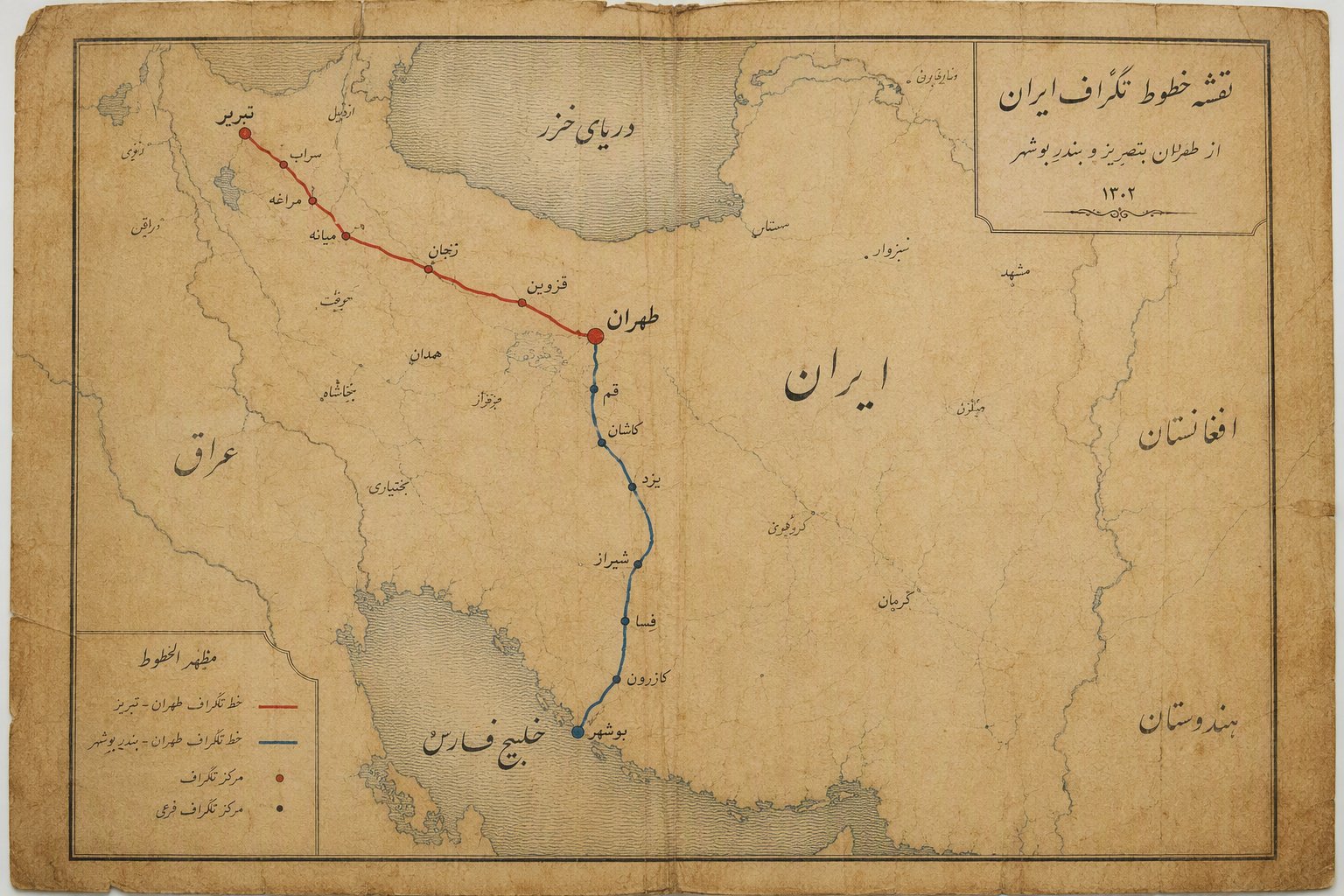
Iran's first lasting telegraph line connected Tehran to the city of Tabriz in the northwest, and from there onward through Ottoman territory to the European telegraph network. The line was constructed in stages during the 1850s and early 1860s, with the section from Tehran to Tabriz completed under the patronage of Amir Kabir, the visionary chancellor of Naser al-Din Shah Qajar. The Tehran-to-Tabriz route was chosen deliberately, reflecting both the strategic importance of the Azerbaijani frontier and the political necessity of maintaining rapid communication with Iran's northwestern provinces, which were frequently restive.
A second critical line followed soon after, running from Tehran southward through Isfahan and Shiraz to the Persian Gulf port of Bushehr. This southern line connected Iran to the British-Indian telegraph network, which had already reached the Gulf coast through its colonial holdings. The Bushehr line was of enormous strategic value to the British Empire, which sought to ensure rapid communication between London and its crown jewel, British India. Tehran sits at approximately 35.7 degrees north and 51.4 degrees east, while the southern terminus at Bushehr sits on the shores of the Persian Gulf at roughly 28.9 degrees north and 50.8 degrees east.
How the Telegraph Came to Iran
The story of the telegraph in Iran begins not in Tehran but in Europe, where Samuel Morse's practical telegraph system had revolutionized communications in the 1840s. Within a decade, telegraph lines crisscrossed the major powers of Europe and were pushing outward through the Ottoman Empire and British India. The Qajar court, observing these developments, recognized both the opportunity and the threat that the new technology represented.
Amir Kabir, who served as the chief minister of Naser al-Din Shah from 1848 to 1852, was the primary driving force behind Iran's adoption of the telegraph. A reformer with a keen awareness of Iran's technological backwardness relative to European powers, Amir Kabir saw the telegraph as essential for modernizing the administration and strengthening central control over the provinces. During his brief tenure, he initiated the construction of the first domestic telegraph line between Tehran and the northern city of Semnan, a relatively short route that served as a proving ground for the technology.
After Amir Kabir's execution in 1852, the telegraph project stalled for several years. It was not until the Crimean War and the subsequent expansion of Ottoman and British telegraph networks that the Qajar government resumed construction with urgency. British engineers and technicians played a significant role in laying the lines, particularly the southern route to Bushehr, which was partially financed and technically supported by the British government for its strategic value in the Indo-European telegraph corridor.
What the Telegraph Changed
The impact of the telegraph on Iranian society was profound and far-reaching. In the realm of governance, the telegraph allowed the Shah and his ministers in Tehran to issue orders to provincial governors and military commanders in a matter of hours rather than weeks. This dramatically increased the central government's ability to respond to rebellions, manage frontier crises, and coordinate tax collection. Governors who had once enjoyed considerable autonomy due to the slow pace of communication now found themselves subject to direct oversight from the capital.
In the commercial sphere, the telegraph transformed the dynamics of trade. Merchants in the bazaars of Tehran, Isfahan, and Tabriz could now receive price information from the Persian Gulf ports and from markets in the Ottoman Empire almost in real time. This leveled the informational playing field, though it also benefited foreign trading companies that had better access to telegraph services. The telegraph also facilitated the rapid transmission of news, and the first rudimentary newspapers in Iran began to incorporate telegraphic dispatches from abroad.
The cultural impact was equally significant. The telegraph introduced Iranians to the concept of instantaneous long-distance communication, a notion that must have seemed almost miraculous to a population accustomed to measuring information flow in days and weeks. The technology also brought Iran into the international diplomatic network, allowing the court to communicate directly with embassies and foreign governments.
The Indo-European Telegraph and British Influence
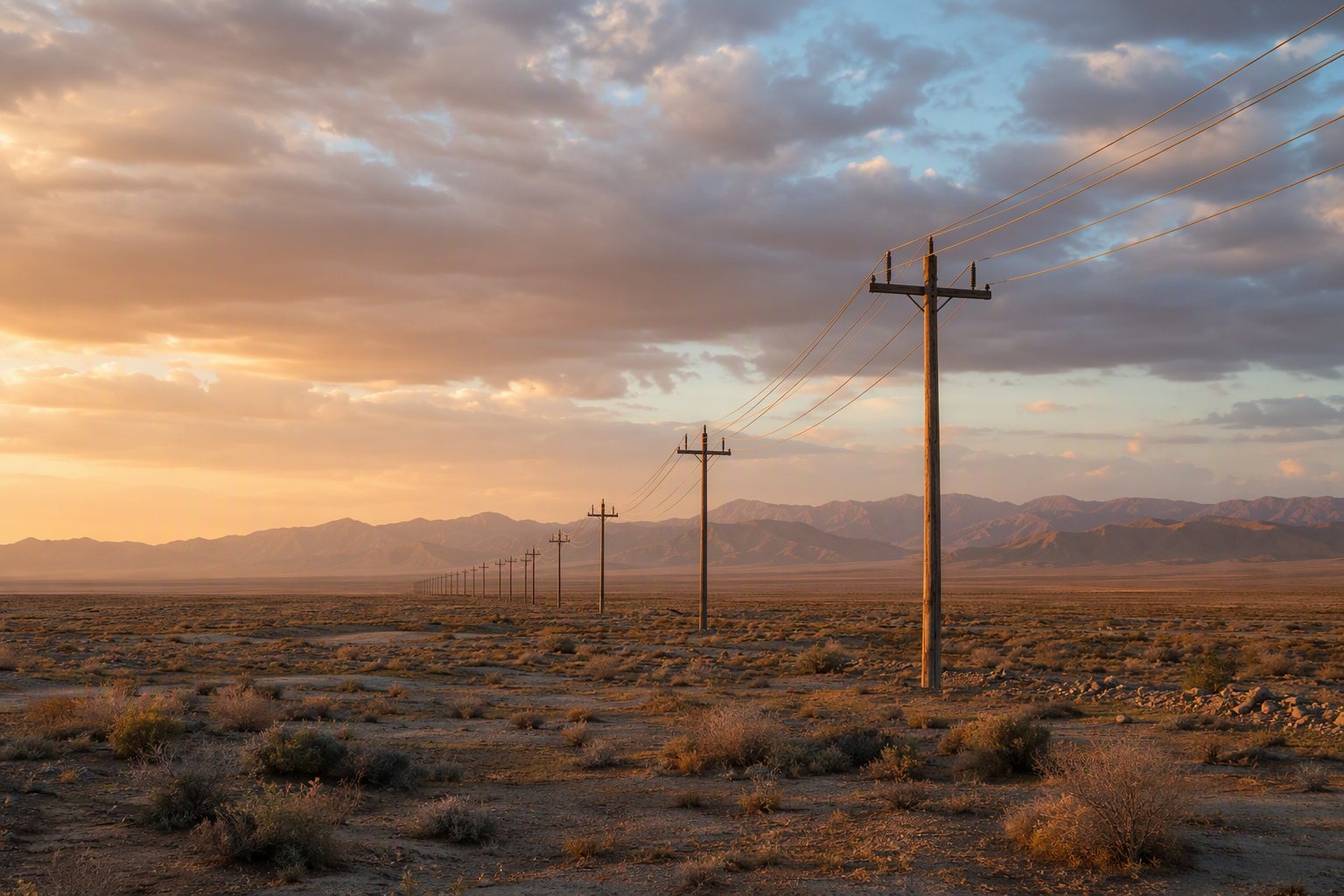
The southern telegraph line from Tehran to Bushehr became a critical segment of the broader Indo-European telegraph network that connected London to Bombay. Completed in the 1860s and 1870s, this international line passed through Iranian territory and was jointly operated by British and Iranian authorities. The British-Indian Telegraph Department maintained stations along the route, and British operators worked alongside their Iranian counterparts.
This arrangement gave Britain considerable influence over Iran's communications infrastructure. During times of political tension, particularly between Britain and Russia over influence in Central Asia and the Caucasus, control of the telegraph lines became a matter of strategic importance. The British valued the Iranian corridor as a backup route for communications with India, should the primary Ottoman route be disrupted.
For Iran, the presence of the Indo-European line brought both benefits and complications. Iranian officials gained access to a faster and more reliable communications network, but the foreign operation of key infrastructure on Iranian soil was a source of resentment. This tension between technological modernization and national sovereignty would recur throughout Iran's relationship with the telegraph and, later, with other imported technologies.
The Telegraph and the Constitutional Revolution
The telegraph played a direct and dramatic role in the Constitutional Revolution of 1905 to 1911. Provincial leaders, clerics, and intellectuals used telegraphic messages to coordinate their resistance to autocratic rule and to spread news of protests and government crackdowns across the country. The famous telegrams sent from Tabriz to Tehran during the siege of the British Legation and the subsequent events demonstrate how the technology had become an essential tool of political mobilization.
Perhaps most symbolically, when the constitutionalist forces prevailed and Naser al-Din Shah's successor Mozaffar al-Din Shah agreed to sign the constitution in 1906, the news spread across Iran via the telegraph network. For the first time, a political development of such magnitude reached all corners of the country almost simultaneously, creating a shared national consciousness that had never before existed.
The telegraph also facilitated communication between Iranian intellectuals in the diaspora and their counterparts at home. Exiled reformers in Istanbul, London, and Cairo sent telegraphic messages that were published in Iranian newspapers, creating a transnational flow of ideas that helped fuel the constitutionalist movement.
Legacy and Modern Context
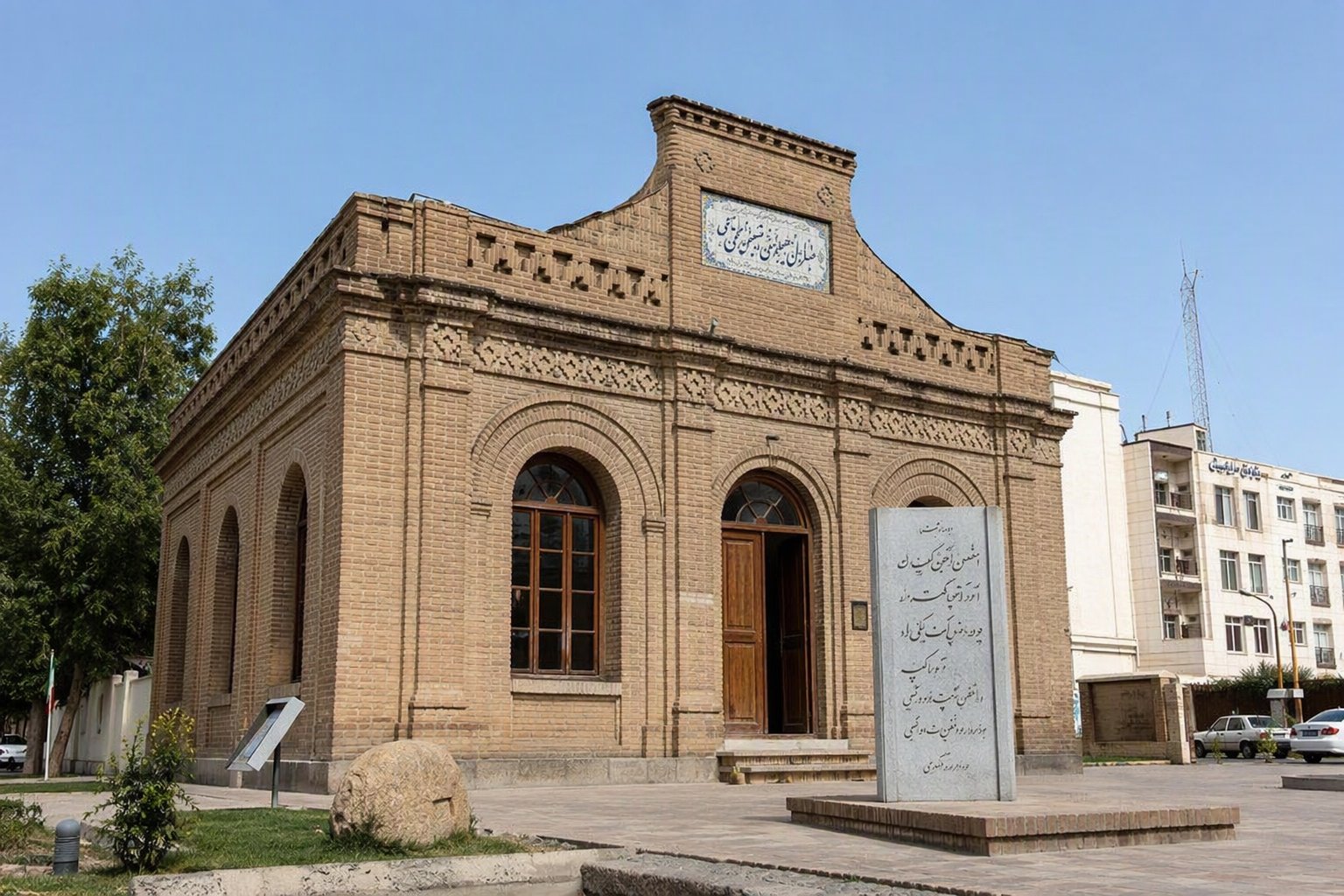
The telegraph network continued to expand throughout the twentieth century, eventually reaching virtually every city and town in Iran. The technology remained in active use for telegrams well into the 1990s, though it was gradually superseded by the telephone and, later, digital communications. Today, many of the old telegraph station buildings survive as historical landmarks, and some have been converted into museums or cultural centers.
The Central Post and Telegraph Office in Tehran, constructed during the late Qajar period, stands as a monument to the era when the telegraph represented the cutting edge of communications technology. The building's architecture blends Persian and European elements, reflecting the hybrid nature of the technology transfer that brought the telegraph to Iran.
For visitors interested in the history of the telegraph in Iran, several museums in Tehran and Tabriz maintain collections of vintage telegraph equipment, including Morse keys, sounders, and original message tapes. The National Museum of Iran in Tehran occasionally features exhibits on the history of communications technology, including the role of the telegraph in shaping modern Iran.
Using Mehyar Taxi, travelers can visit the historic post and telegraph buildings in central Tehran, or arrange transport to other sites associated with the telegraph's history across the country. Mehyar Buses provides route information for those interested in following the old telegraph route from Tehran to Tabriz or from Tehran to Isfahan by modern means.