
Tucked into the arid landscape southeast of Yazd, the village of Fahraj is one of the most historically significant settlements in central Iran. With origins that trace back to the Sassanid period, more than a thousand years before the rise of Islam, Fahraj has witnessed the comings and goings of empires, merchants, and pilgrims crossing the great desert highways of the Iranian plateau. Today, this quiet village offers travelers a rare glimpse into the continuity of Persian rural life, where ancient mud-brick structures stand alongside working farms, where Zoroastrian fire temples share the skyline with Islamic mosques, and where the pace of life remains governed by the rhythms of the desert rather than the clock. For visitors to Yazd seeking something beyond the city's famous windcatchers and bazaars, Fahraj is an unmissable excursion into the deep history of the Iranian desert.
Where Is Fahraj Village?
Fahraj is located approximately 22 kilometers southeast of the city of Yazd, in the central desert region of Iran. The village sits along the old road connecting Yazd to the town of Bafaq, at an elevation of around 1,250 meters above sea level. Its geographic coordinates place it at roughly 31.80 degrees north latitude and 54.45 degrees east longitude, squarely within the Yazd Province administrative boundaries.
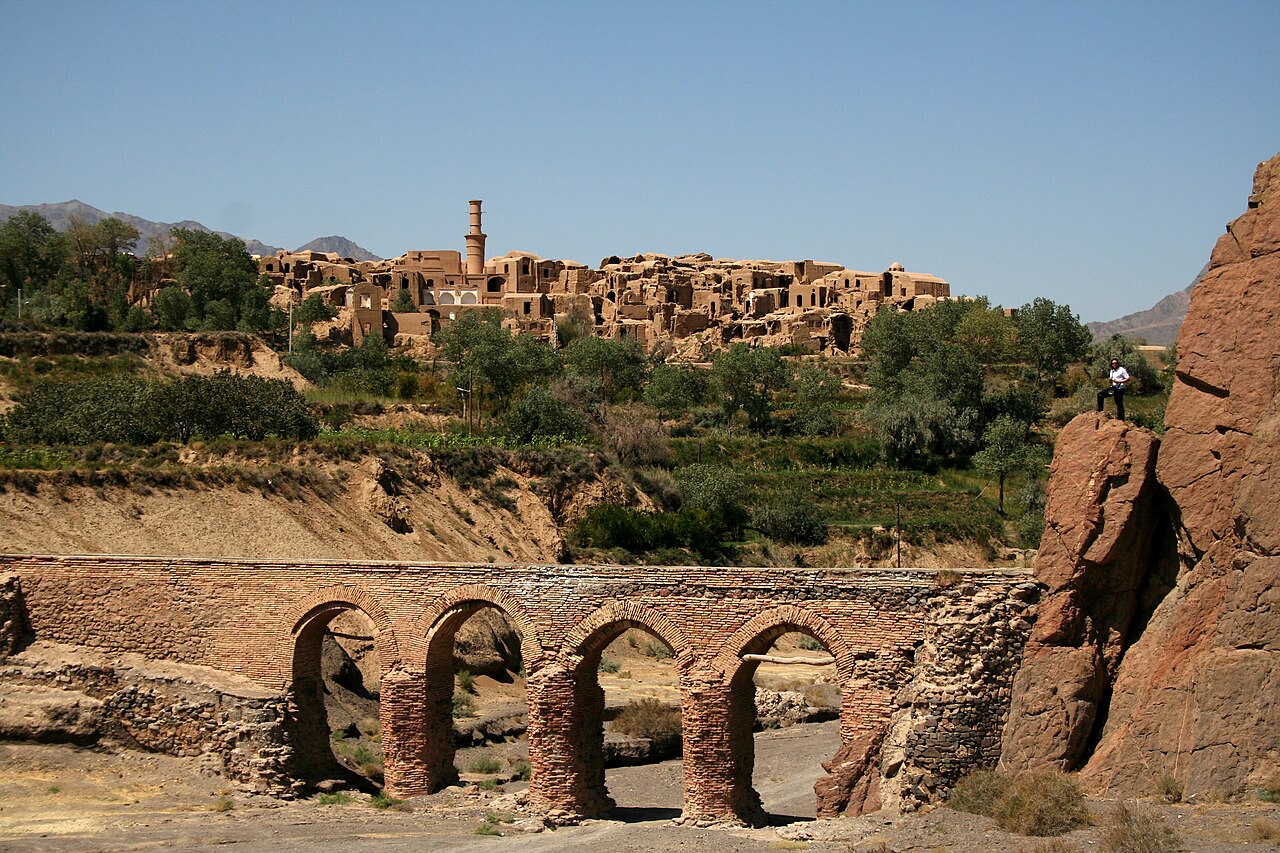
The village occupies a strategic position at the edge of the Dasht-e Kavir desert, where the alluvial fan of the nearby Shirkuh mountains gives way to flat desert terrain. This transitional location has shaped Fahraj's character throughout history. It served as a resting point for caravans traveling between Yazd and Kerman, and its proximity to water sources from the Shirkuh highlands made it viable for agriculture in an otherwise harsh desert environment. The surrounding landscape features typical desert vegetation, including hardy scrub bushes and tamarisk trees, with pockets of cultivated farmland where villagers grow pomegranates, pistachios, and cereals using ancient qanat irrigation systems.
Yazd Province, one of the driest regions in Iran, receives less than 60 millimeters of rainfall annually, yet human settlement here has persisted for millennia thanks to the ingenuity of the qanat system, underground channels that transport water from mountain aquifers to desert villages. Fahraj is one of many villages in the Yazd region that owe their existence to this remarkable engineering tradition.
How to Get to Fahraj Village
Reaching Fahraj from Yazd is a short and straightforward journey, making it an ideal half-day excursion or a pleasant afternoon trip for visitors staying in Yazd.
By Mehyar Taxi. The simplest and most flexible way to reach Fahraj is through Mehyar Taxi. Open the app, set your destination to Fahraj Village, and a driver will take you from your hotel in Yazd directly to the village in about 30 minutes. Having a private car gives you the freedom to explore the village at your own pace and to stop at viewpoints or historical structures along the road. Your driver can wait while you explore and then take you to other nearby attractions or back to Yazd.
By Mehyar Buses. For budget travelers, local buses run between Yazd and Bafaq pass through or near Fahraj. You can use Mehyar Buses to check schedules and plan your connection. The bus ride is longer than a taxi but offers an authentic experience of local transport in central Iran.
By organized tour. Several tour operators in Yazd include Fahraj in their desert excursion itineraries, often combining it with a visit to the Chak Chak Zoroastrian pilgrimage site or the desert village of Kharanaq. These tours typically provide transport, a local guide, and sometimes a traditional meal in the village.
What to See in Fahraj
Fahraj's attractions are not the kind that appear on glossy brochures. They are subtle, layered, and deeply authentic. The village rewards visitors who take their time to walk its narrow lanes, observe the details of its architecture, and speak with its residents.
The Sassanid-era fire temple. The most historically significant structure in Fahraj is the remains of an ancient Zoroastrian fire temple, believed to date from the Sassanid period (224 to 651 AD). The structure, built of mud brick and baked brick, stands as a testament to the importance of this location in pre-Islamic Iran. While not as grand as the fire temples at Yazd city or nearby Chak Chak, the Fahraj fire temple carries an atmosphere of great antiquity, and its location at the edge of the village, with the desert stretching away behind it, creates a powerful sense of connection to Iran's pre-Islamic past.
Traditional mud-brick houses. The residential fabric of Fahraj is a living museum of desert vernacular architecture. Houses are built from mud brick and adobe, with thick walls that provide natural insulation against the extreme desert temperatures. Many homes feature small internal courtyards, badgirs (windcatchers) adapted to the local conditions, and covered passages that connect buildings and provide shade during the hottest months. The earthy tones of the village blend seamlessly with the surrounding desert landscape, creating a visual harmony that is increasingly rare in modern Iran.
The qanat system. Fahraj's water supply has historically depended on a qanat, an underground channel that brings water from an aquifer in the distant Shirkuh mountains to the village. Walking near the village, you can observe the qanat shafts emerging at the surface at regular intervals, each one marked by a small mound of excavated earth. The qanat system is a UNESCO-recognized achievement of Iranian engineering, and seeing one in active use in Fahraj provides insight into how desert civilizations thrived for thousands of years without modern technology.
Agricultural landscapes. Despite the arid surroundings, the areas around Fahraj support agriculture thanks to the qanat water. Pomegranate orchards, pistachio groves, and fields of wheat and barley create a patchwork of green against the brown desert. In autumn, the pomegranate harvest is a time of great activity in the village, and visitors during this season may be offered fresh pomegranates and locally made pomegranate paste.

Best Time to Visit Fahraj Village
Like Yazd itself, Fahraj experiences a harsh desert climate with very hot summers and cool winters. The best time to visit is during the spring months of March through May, when temperatures are mild and the surrounding farmland is at its greenest. The autumn months of October and November are also pleasant, with warm days and cool evenings that make walking through the village comfortable.
Summer visits, while possible, require preparation. Temperatures in July and August regularly exceed 40 degrees Celsius, and the desert sun is intense. If you do visit in summer, plan your exploration for the early morning or late afternoon, and carry plenty of water. The thick mud-brick walls of the village buildings provide cool interiors even during the hottest part of the day.
Winter in Fahraj can be surprisingly cold, with nighttime temperatures occasionally dropping below freezing. The clear winter skies, however, offer spectacular stargazing opportunities, as the lack of light pollution in the desert makes Fahraj an excellent location for observing the night sky.
Hours and Tickets
Fahraj is a living village, not a ticketed tourist site, so there are no formal opening hours or entrance fees. Visitors are free to walk through the village at any time. However, out of respect for the residents, it is polite to visit during daylight hours and to ask permission before entering private homes or photographing individuals. Some of the historical structures may have local caretakers who can provide additional information about their history and significance.
Nearby Attractions
Fahraj's location southeast of Yazd places it on the route to several other noteworthy destinations. The Zoroastrian pilgrimage site of Chak Chak (Pir-e Sabz) lies about 70 kilometers to the east and is one of the most sacred sites for Zoroastrians worldwide. The historical village of Kharanaq, with its spectacular abandoned mud-brick citadel, is accessible via a scenic detour through the desert. The city of Bafaq, known for its iron mines and traditional architecture, lies further along the road and makes for an interesting addition to a day trip.
Back in Yazd, the UNESCO-listed old city offers a wealth of attractions to complement your visit to Fahraj. Use Mehyar Taxi to explore the Jameh Mosque, the Dolat Abad Garden with its record-breaking windcatcher, and the narrow lanes of the historic quarter. For a broader perspective on the region, our guide to attractions in Yazd covers all the essential sites in the city and its surroundings.
