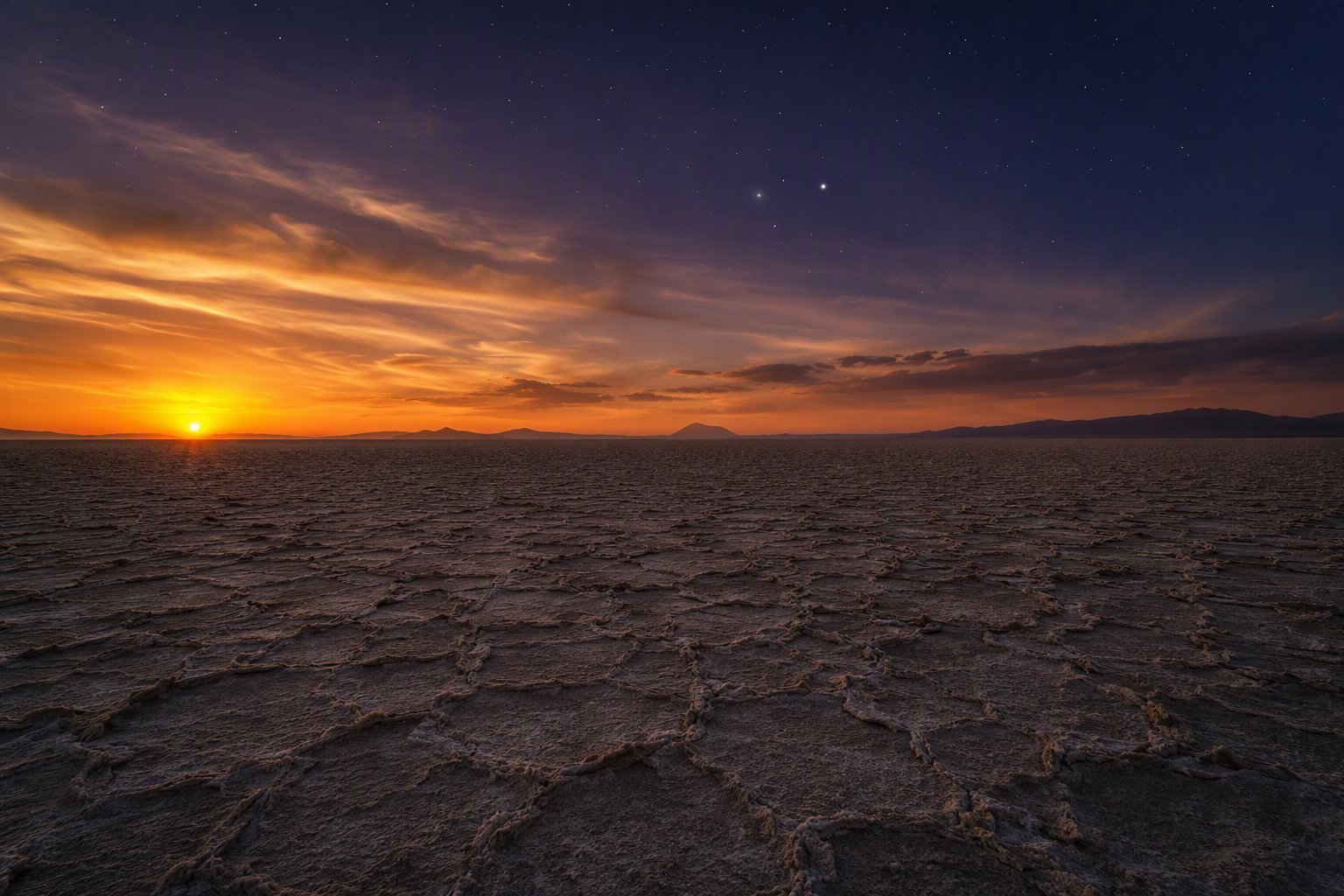
Stand at the edge of the central plateau of Iran and look outward. The land flattens, the mountains recede to the horizon, and what remains is a vast, unbroken plain stretching in every direction. This is the desert country of Iran, a region that covers roughly a third of the country's total land area and includes two of the most significant desert systems in Asia: the Dasht-e Kavir, also known as the Great Salt Desert, and the Dasht-e Lut, the empty desert. Together, these plains form one of the largest contiguous arid zones in the Middle East, and they are among the most striking landscapes that Iran contains.
Iran's deserts are not empty in the way the word suggests. They are shaped by wind, salt, and ancient watercourses into formations that rival the more famous deserts of Africa and Arabia for their visual power. The Dasht-e Lut holds the distinction of recording the highest land surface temperature ever measured by satellite, and its yardang formations, massive ridges carved by wind from consolidated sediment, are among the most dramatic examples of aeolian erosion anywhere in the world. The Dasht-e Kavir, to the north, is a landscape of salt pans, marshlands that dry in summer, and scattered oases where villages have persisted for centuries.
This guide covers the geography of Iran's desert plains, how to reach them from the major cities that border them, what you will see when you get there, the best time to go, and the logistics of traveling safely in a region where temperatures can exceed fifty degrees Celsius and the nearest settlement may be a hundred kilometres away. It is written for travelers who want to understand the landscape, not simply to photograph it.

Where are Iran's desert plains?
Iran's central desert region occupies the heart of the country, bounded by mountain ranges on nearly every side. The Alborz chain forms the northern wall, separating the deserts from the Caspian lowlands. The Zagros range runs along the western side, and the eastern deserts are bounded by highlands that separate Iran from Afghanistan and Pakistan. Within this enclosed basin, two great plains dominate.
The Dasht-e Kavir, or Great Salt Desert, extends across the north-central part of the country, roughly from the area east of Tehran and Qom to the borders of Khorasan in the east. It is approximately eight hundred kilometres long and three hundred and twenty kilometres wide at its broadest point. The surface is dominated by salt pans, known locally as kavir, which form when shallow lakes evaporate and leave behind crusts of salt and clay. In the wet season, parts of the kavir hold water and become marshland. In the dry season, the surface bakes into a hard, cracked crust that stretches to the horizon.
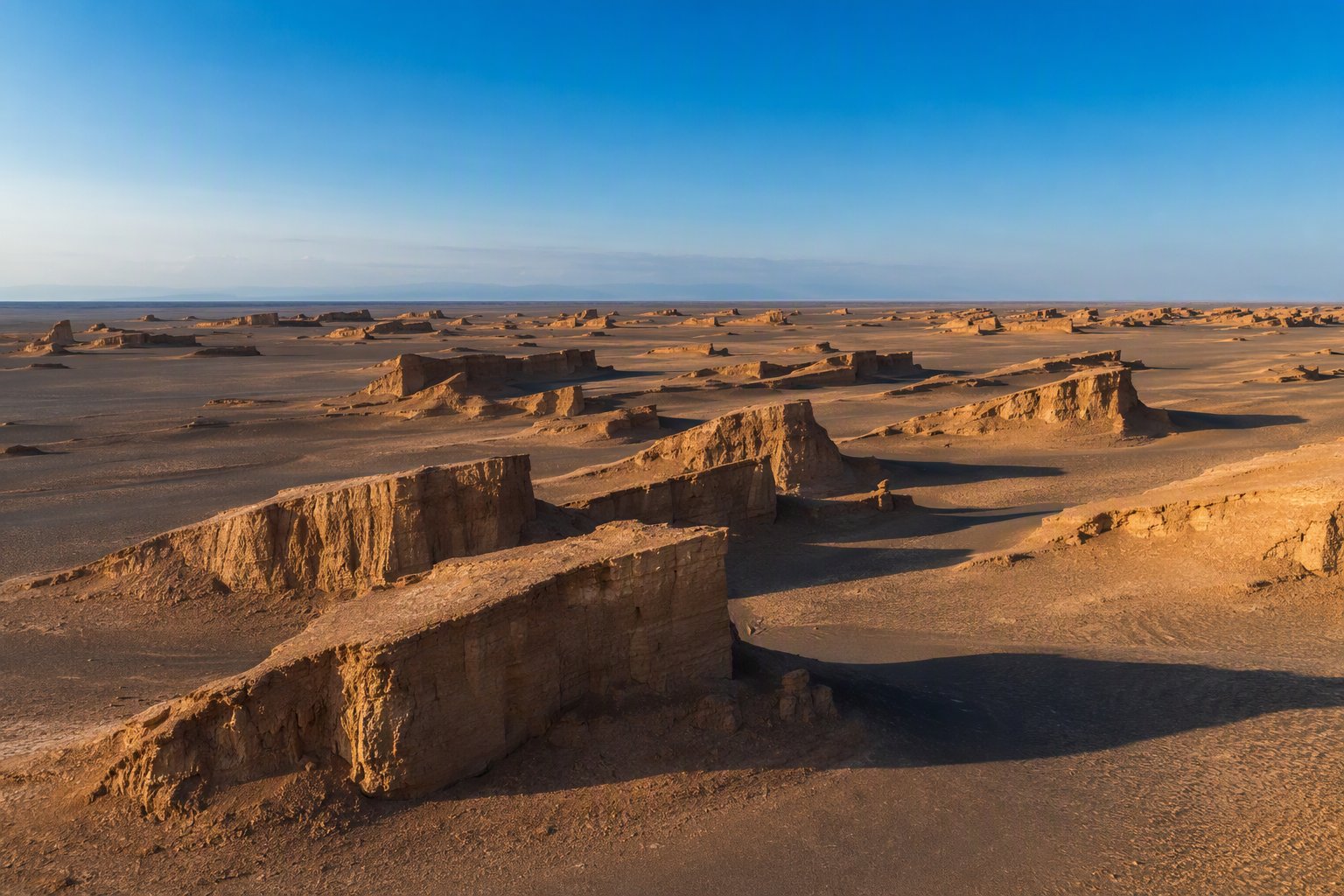
The Dasht-e Lut lies to the southeast, in the provinces of Kerman and Sistan and Baluchestan. It is roughly nine hundred kilometres long and narrower than the Kavir, about three hundred and twenty kilometres wide. The Lut is a different kind of desert. Rather than salt flats, its most striking features are the yardangs, enormous ridges of wind-carved rock that rise from the desert floor, and the black sand dunes of its eastern portion. The central portion of the Lut is so arid and windswept that it is virtually lifeless, and it is sometimes described as the hottest place on Earth by surface temperature.
Between the two deserts, and around their margins, lie transitional zones of gravel plains, alluvial fans, and scattered oases. The towns of Yazd, Kerman, Tabas, and Damghan sit on the edges of the desert, and each has served historically as a gateway for trade routes that crossed or skirted the arid interior.
How to get to the desert
Reaching the desert plains of Iran requires a journey from one of the cities that border them. The most common starting points are Tehran, Isfahan, Yazd, and Kerman, each of which has road connections and, in most cases, airports and bus terminals.
From Tehran
Tehran is the closest major city to the western edge of the Dasht-e Kavir. The drive from Tehran to the desert margin near Garmsar or Semnan takes roughly two to three hours by car. The road follows the old Silk Route eastward, passing through the Alborz foothills before the land opens onto the plain. From Semnan, you can continue east toward Damghan and the further reaches of the Kavir, or turn south toward the desert's central zones.
Open Mehyar and choose Buses for scheduled services from Tehran's eastern terminals to Semnan, Damghan, or Tabas. The bus is the most practical option for travelers without a private vehicle. For those who prefer comfort and flexibility, Mehyar Taxi can arrange a private car from Tehran to the desert edge, with the option to stop at villages and caravanserais along the way.
From Isfahan and Yazd
Isfahan lies to the southwest of the Kavir, and the road from Isfahan to the desert passes through the town of Nain before reaching the desert margin. The journey is roughly three hundred kilometres and takes about three and a half hours. Yazd, which is closer to both deserts, is the most popular base for desert excursions. From Yazd, the road to Tabas runs through the heart of the transitional zone between the Kavir and the Lut, and the landscape becomes progressively more arid as you travel.
Mehyar Buses operates regular services between Isfahan, Yazd, and Tabas, and Mehyar Taxi is available for private transfers from Yazd into the desert. Many visitors combine a stay in Yazd, with its own rich desert architecture and qanat systems, with excursions into the surrounding desert landscape.
From Kerman to the Dasht-e Lut
Kerman is the closest city to the Dasht-e Lut. The road from Kerman northeastward toward the Lut passes through the town of Mahan and then onto the desert margin, where the yardang formations begin. The Lut is more remote and more difficult to access than the Kavir, and independent travel into its central zones requires careful planning, adequate water, and a vehicle suited to unpaved surfaces.
What to see in the desert
The desert plains of Iran offer a range of natural and cultural features that reward careful exploration. The landscape itself is the primary attraction, but there are specific formations and sites that deserve attention.
The salt pans of the Dasht-e Kavir
The salt pans, or kavir, are the defining feature of the northern desert. In the dry season, the surface of the kavir is a hard, white crust of salt and clay, cracked into polygonal patterns that stretch as far as the eye can see. The effect is stark and otherworldly. In some areas, the crust is thin, and the underlying mud is soft. Walking on the kavir requires caution, and you should not venture onto the salt flat without a local guide who knows where the surface is firm.
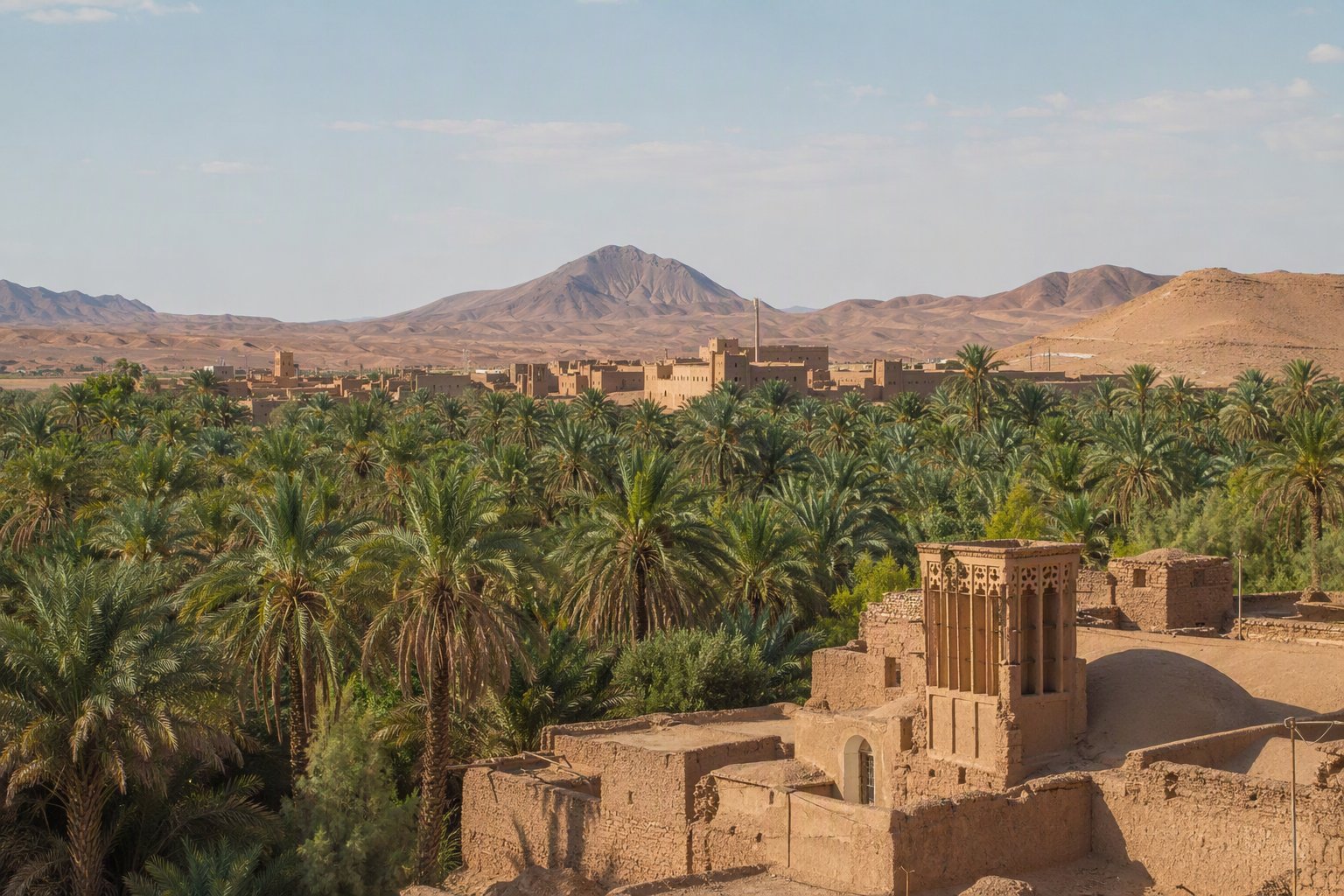
The peripheral zones of the Kavir contain oases and seasonal wetlands that support birdlife, including migratory species that stop in the region during spring and autumn. The oasis town of Tabas, on the southeastern edge of the Kavir, is surrounded by date palm groves and natural springs that contrast sharply with the arid landscape nearby.
The yardangs of the Dasht-e Lut
The yardangs of the Lut are among the most dramatic landforms in the desert world. These are long, parallel ridges of consolidated sediment that have been carved by wind into streamlined shapes, some reaching twenty metres in height and stretching for kilometres. The Persian term for these formations is kalut, and the most accessible kaluts are located on the western margin of the Lut, reachable by road from Kerman.
The kaluts are best visited in the early morning or late afternoon, when the low sun casts long shadows across the ridges and the sand glows with warm light. The silence of the place is remarkable. The Lut is one of the quietest places on Earth, and the absence of wind on a still day creates a sense of isolation that is difficult to describe until you have experienced it.
The oases and desert towns
The desert margins of Iran are dotted with towns and villages that have survived for centuries by tapping underground water through qanat systems. Tabas, on the Kavir side, has a historic town centre with traditional architecture adapted to the desert climate, including thick mud-brick walls, small windows, and windcatchers. The town is known for its natural hot springs and the date palm groves that surround it.
On the Lut side, the town of Mahan, just outside Kerman, is famous for the garden and tomb of the Sufi saint Shah Nematollah Vali, a masterpiece of Persian garden design in a desert setting. The garden's water channels and cypress trees create an oasis of calm within sight of the desert.
Best time to visit
Iran's desert plains are extremely hot in summer. Daytime temperatures in the Lut regularly exceed forty-five degrees Celsius, and the satellite-measured surface temperature has reached nearly seventy degrees. Summer travel in the desert is dangerous and strongly discouraged.
The best time to visit is from late October through March. During these months, daytime temperatures range from the mid-teens to the mid-twenties, and the nights are cool but not freezing. The winter months of December and January are the most comfortable for desert travel, though you should be prepared for cold nights, when temperatures can drop close to zero.
Spring, from March to May, is also a viable season, particularly for the Kavir, where the peripheral wetlands may still hold water from the winter rains. The wildflowers that briefly bloom on the desert margin after a wet winter are a special feature of the spring visit. By late May, the heat becomes intense, and the window closes until autumn.
Safety and logistics
Travel in Iran's desert plains requires preparation. The landscape is beautiful but unforgiving, and the distances between settlements can be large.
Carry more water than you think you will need. A minimum of three litres per person per day is the standard recommendation for desert travel, and you should carry extra in your vehicle. Fuel up at every opportunity, as petrol stations can be widely spaced on desert roads. Let someone know your planned route and expected return time before setting out.
A mobile phone may not have coverage in remote sections of the desert. A satellite communication device or an emergency plan is advisable for trips into the deeper zones of the Lut or the central Kavir. Do not attempt to drive off-road in the Lut without a guide and a vehicle equipped for the terrain.
For most visitors, the safest and most rewarding approach is to join an organized excursion from Yazd or Kerman, where local operators know the routes and the conditions. Mehyar Taxi can arrange private transfers to desert gateway towns, and Mehyar Buses connects the major cities to Tabas and other desert-edge settlements. If you prefer the independence of a private vehicle, stay on paved roads, carry supplies, and turn back if conditions deteriorate.
Nearby and combining the desert with other destinations
Iran's desert plains sit at the centre of the country's classic tourist loop, and a desert visit can be combined with stops at Isfahan, Yazd, Kerman, and Shiraz. Many travelers spend a few days in Yazd, exploring its qanats, its old town, and its Zoroastrian heritage, before heading into the surrounding desert. A trip to the kaluts of the Lut can be combined with a visit to Kerman's bazaars and the garden of Mahan.
For travelers interested in the cultural landscape of Iran's desert, the route from Yazd through Tabas to the Kavir margin passes through some of the oldest continuously inhabited settlements in the country. The qanat systems, the caravanserais, and the desert architecture along this route tell the story of how people have lived with aridity for thousands of years, and they add depth to the natural spectacle of the desert plains themselves.
For further reading on Iran's desert landscapes, see our articles on [Yazd's qanat heritage](../drafts/aali-qapu-of-isfahan.en.md) and the [historic caravanserais of the central plateau](../drafts/abshar-aj-ramsar.en.md).