
Tehran is a city that keeps reinventing itself, and the result is a sprawl of Qajar palaces, Pahlavi boulevards and modern cultural centres stacked against the Alborz mountains to the north and spreading south toward the desert plain. The historic core sits around the Grand Bazaar and Golestan Palace, where the Qajar dynasty built the first modern capital of Iran, and the museums and galleries of the northern avenues add a second layer. Three days is the honest minimum: one for the historic south, one for the northern palaces and museums, and one for the parks, bridges and viewpoints of the Alborz fringe.

Where is Tehran?
Tehran is the capital of Iran and sits in the north of the country at the foot of the Alborz mountain range. The city is at about 1,200 metres above sea level in the centre, rising to nearly 1,800 metres in the northern districts where the foothills begin. It lies roughly 450 kilometres from the Caspian Sea to the north and about 600 kilometres from Isfahan to the south. The metropolitan area stretches from the Azadi Tower in the west to the eastern parklands.
How to get to Tehran
Mehyar Flights brings most visitors into Imam Khomeini International Airport south of the city or Mehrabad Airport to the west; from either, Mehyar Taxi reaches the centre in thirty to sixty minutes depending on traffic. Mehyar Buses connect Tehran with every major Iranian city, and the main terminal at Beyhagh in the north and the Southern Terminal handle intercity routes. The railway station in the south-east connects by overnight train to Mashhad, Shiraz, Tabriz and Kerman. Inside Tehran the metro is the fastest way to cross the city, with four colour-coded lines covering the main tourist corridor from Tajrish to the Grand Bazaar. For door-to-door trips, Mehyar Taxi fills the gaps between metro stations and sights.
What to see first
Start at Golestan Palace on Khordad 15th Street near the Grand Bazaar, a UNESCO-listed complex of Qajar-era palaces, gardens and museums. Built over two centuries as the ceremonial seat of the Qajar and early Pahlavi dynasties, the complex holds the Marble Throne Hall, where Reza Khan was crowned in 1925, the Shams al-Imara, the Mirror Hall and the Diamond Hall. The buildings combine Persian, Russian and European styles, and the tilework, plaster carving and painted ceilings are among the finest of the nineteenth century. Plan a half-day, since the museum halls open and close on their own schedules and the gardens alone deserve a long walk. Tickets are sold per hall or as a combined entry, often listed around 15,000 to 46,000 tomans per section.

Ten minutes' walk from Golestan is the Grand Bazaar of Tehran, the largest covered market in Iran. The bazaar stretches from the Meydan-e Emam Khomeyni southward in a grid of covered alleys, each guild in its own section: carpets in one quarter, gold in another, spices in a third. The bazaar is as much about the architecture as the trade: vaulted brick ceilings, courtyards with pools, and caravanserais converted to wholesale shops. Friday afternoon and public holiday mornings are quiet; Saturday through Wednesday morning is the best trading time.
The National Museum of Iran, on Si-e Tir Street, is the natural second stop. The building holds two floors of archaeological finds from prehistoric Susa and Persepolis through the Sasanian silver collections and Islamic ceramics, and the chronological arrangement gives a useful overview of five thousand years of Iranian material culture. The museum opens roughly 9:00 to 17:00 except on public holidays, and the ticket is usually around 10,000 tomans for foreigners.
What about the northern palaces and museums?

Niavaran Palace Complex, in the Niavaran neighbourhood of northern Tehran, was the last Pahlavi residence before 1979. The main palace, a two-storey building with 60 rooms, is designed in a modernist style with traditional Iranian elements, and the grounds hold the private car museum, a small garden palace called the Kakh-e Sāhebqrāniyeh from the Qajar era, and the private library of Farah Diba. Half a day is enough for the full complex.
Saadabad Complex, a short drive to the west on Valiasr Street, was another Pahlavi residence with three main palace buildings set in a large wooded garden. The Green Hall, the White Hall and the Speculum Hall are each decorated differently, and the grounds include a museum of global arts and a natural history collection. It is the natural companion to a morning at Niavaran.
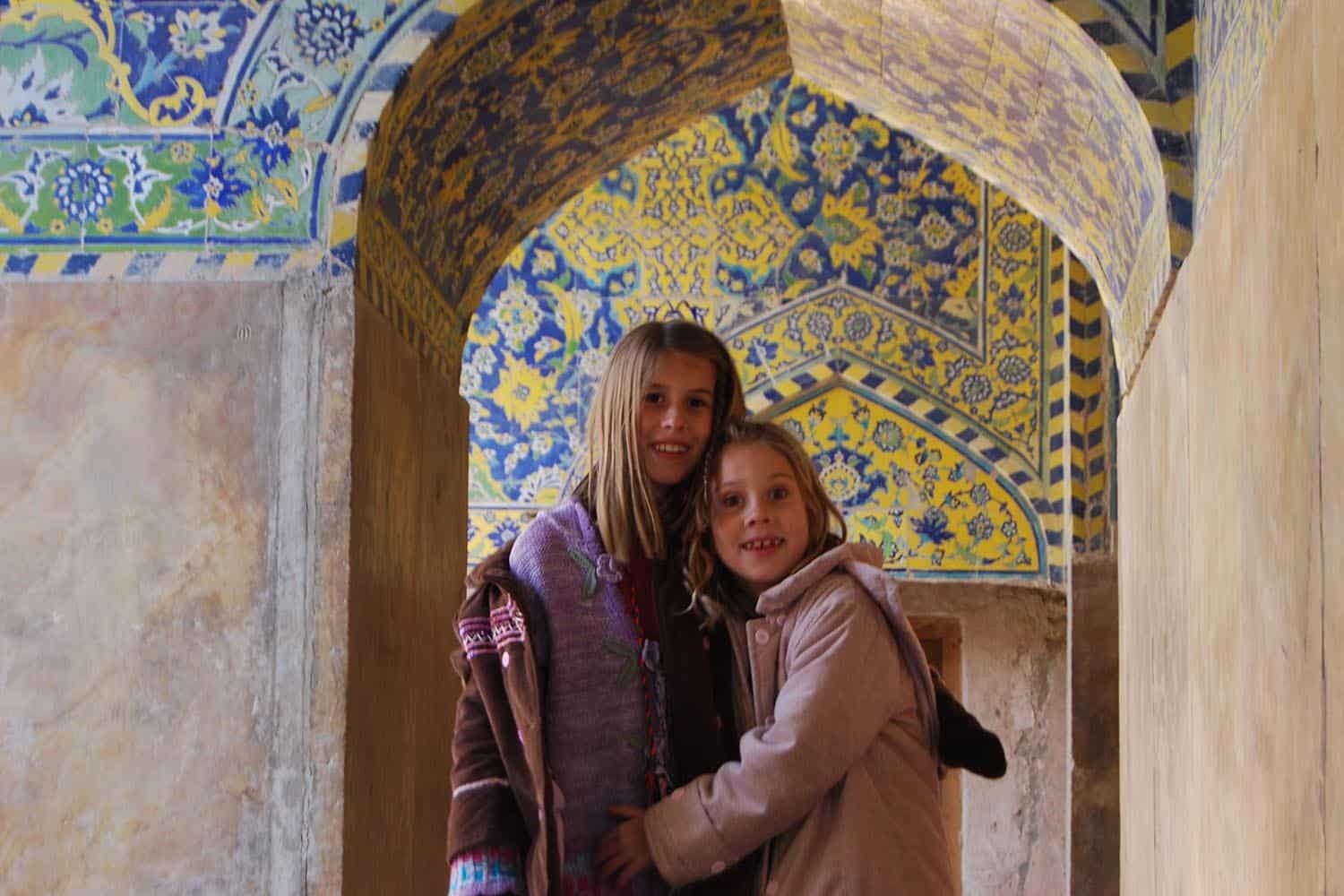
The Azadi Tower, on Azadi Square at the western approach to the city, is the most recognisable modern landmark in Tehran. Built in 1971 to mark 2,500 years of the Persian Empire, the tower is a 45-metre white marble structure combining Sasanian and Islamic architectural forms. The base holds a small museum, and the viewing platform near the top gives a clear line across the city to the Alborz.
Are there museums and cultural stops?
The Tehran Museum of Contemporary Art, at the northern edge of Laleh Park on Karim Khan Zand Street, holds one of the most important collections of modern Western and Iranian art outside Europe and North America, with works by Warhol, Pollock, Dalí and major Iranian painters. The building itself, designed in the 1970s, is an architectural statement in exposed concrete and badgirs. The adjacent Museum of Reza Abbasi on Dr. Shariati Street covers Islamic art from the seventh century to the Qajar period, with ceramics, metalwork, lacquer painting and calligraphy.
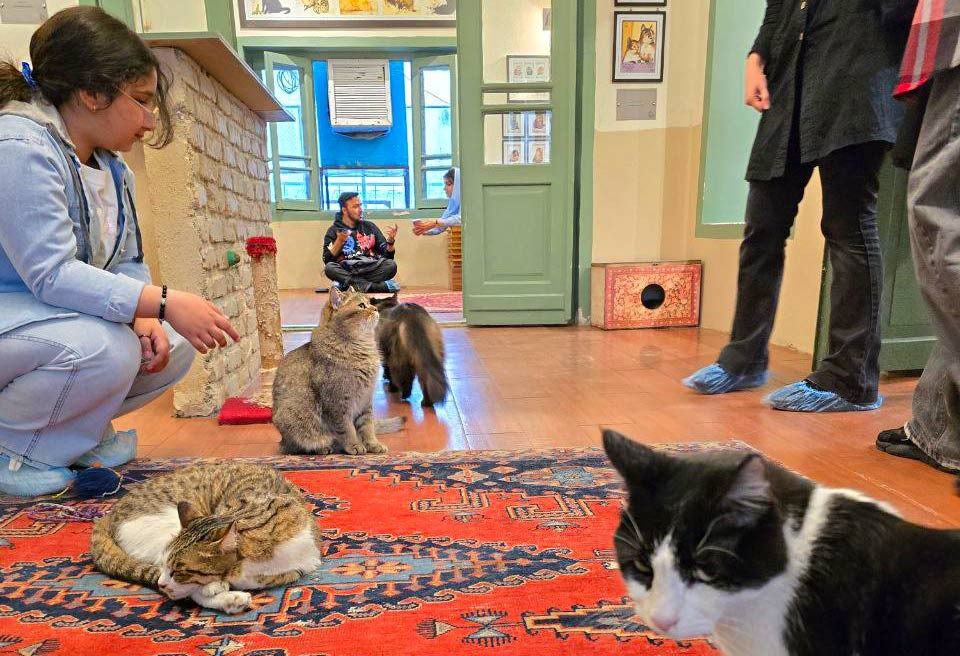
For a lighter experience, the Cat Museum Café in northern Tehran is a quirky stop with feline-themed art and a terrace café.
What about parks and open spaces?
Tabiat Bridge, in the Abbasabad district, is a 270-metre pedestrian bridge designed by a young Iranian architect and connecting two parks on either side of a major highway. The multi-level structure has seating, planting and views, and it is the most popular evening walk in central Tehran.
Chitgar Lake, west of the city at the foot of the mountains, is a large artificial reservoir with a boardwalk, a shopping mall on its shore and mountain views. It is the longer evening outing and the best sunset panorama in Tehran. Jamshidieh Park in the far north is a terraced stone garden in a natural valley, good for a half-day escape from the city.
Best time to visit Tehran
April to May and September to October give the most comfortable city weather. The spring brings blossom to the northern parks and the autumn light is clear on the Alborz. Summer is hot and dry, and the air quality drops, but the northern districts stay cooler in the evenings. Winter is cold, with occasional snow on the northern hills and clear skies after rain.
Where to stay
Book through Mehyar Hotels in the central or northern districts for easy access to both the historic south and the palace museums of the north. Mehyar Buses and Mehyar Flights connect Tehran with all major Iranian cities, and the Mehyar app bundles taxi, bus, flight and hotel into a single booking. With three days and a central base, you can cover the Grand Bazaar and Golestan in one day, Niavaran and Saadabad in another, and the museums, parks and Azadi Tower in a third.