
Sari sits where the Alborz mountains tip into the Caspian Sea, a city of firsts in Iranian history: the first stop on the national railway, the birthplace of paper-making in the Middle East, and the gateway to the dense Hyrcanian forests that climb northward toward the shore. The capital of Mazandaran Province has kept a rich mix of Safavid mosques, Qajar mansions and natural wonders within a short drive, from a terraced spring that looks like a natural staircase to a forest lake born from an earthquake. This guide covers every key sight, the best season to come, and how to reach Sari with Mehyar at each step.

Where is Sari?
Sari is the capital of Mazandaran Province in northern Iran, wedged between the Alborz range and the Caspian coast. The city lies about 230 kilometres northeast of Tehran by road, a three-hour drive through the mountains via the Chalus Road or the Haraz Road, both among the most scenic highways in the country. It sits on the main east-west corridor of the Caspian littoral, making it a natural base for exploring the wider region: Ramsar to the west, Gorgan to the east, and the forested valleys of the Alborz to the south. The first paper factory in the Middle East was built here, and the first railway line in Iran passed through Sari on its way to the Caspian, a legacy that shaped the modern city around industry and trade.
How to get to Sari and getting around
Mehyar Buses runs frequent services from Tehran to the Sari bus terminal, with departures throughout the day and a journey time of roughly three to four hours depending on traffic through the Alborz passes. The road is well-paved and the mountain scenery is reward enough. Mehyar Flights connects Tehran to the Dasht-e Naz Airport near Sari, cutting travel time to under an hour for those who prefer to fly.
Once in the city, Mehyar Taxi is the easiest way to reach your hotel and move between the central sights, the Abbasabad Historical Complex and the forest parks. Sari is compact enough to walk its core, but the best natural attractions, from Badab-e Sourt to Chort Lake, sit well outside walking distance, so a private car or taxi is essential for the full itinerary.
The Clock Square and the Grand Mosque
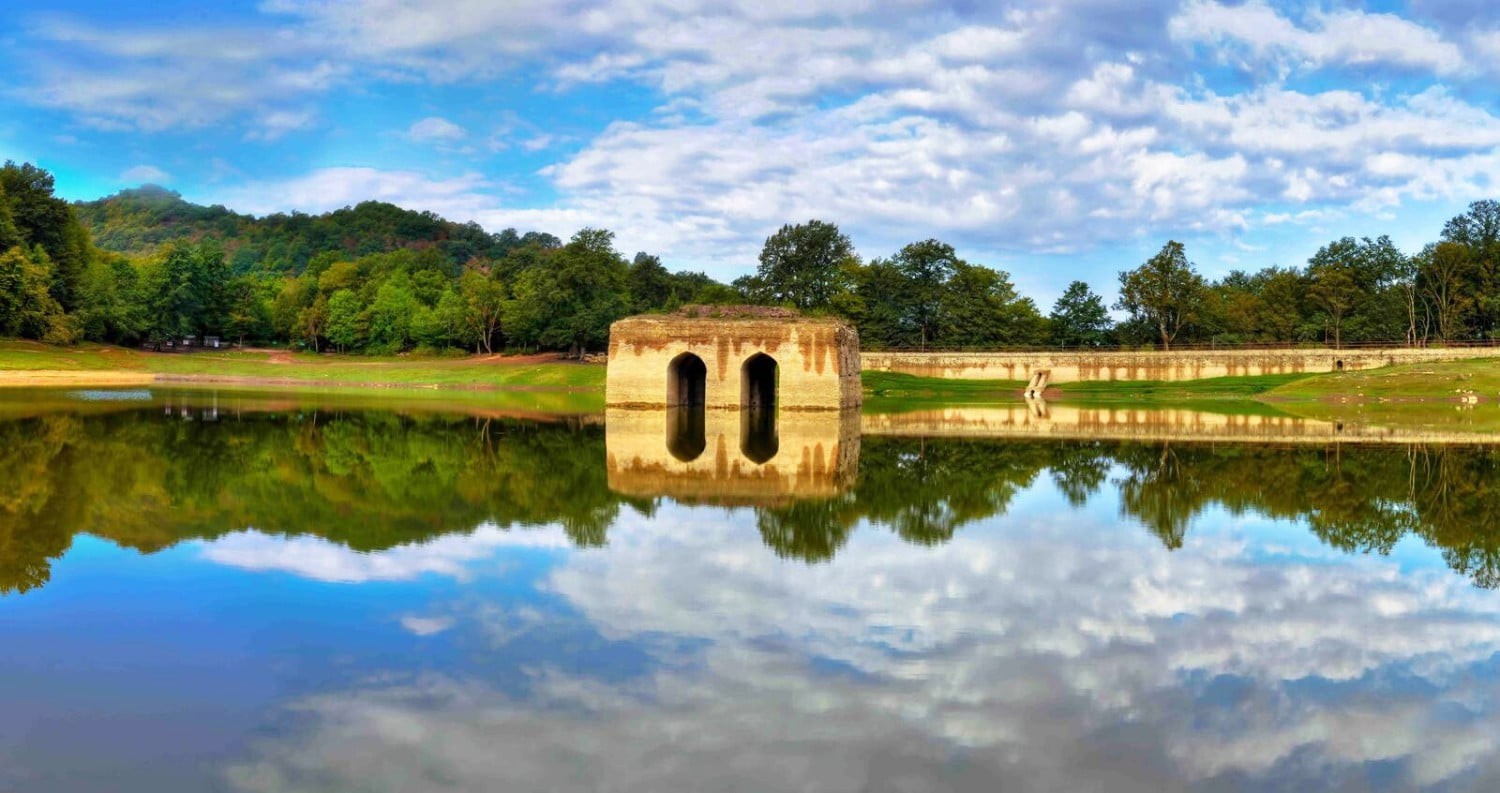
The Clock Square, or Meydan-e Sa'at, is the beating heart of modern Sari. A tall clock tower stands at its centre, the bell sounding after every hour change. The square sits in the commercial core, surrounded by shops and cafés, and serves as the starting point for any walking tour of the city. It is especially lively in the evening when families gather along its wide sidewalks.
The Grand Mosque of Sari is the oldest mosque in the land of the Alavids, with origins that reach back to the early Islamic centuries, though the structure was substantially rebuilt during the Qajar period. Local tradition holds that the mosque was raised on the ruins of a Zoroastrian fire temple. In 2018 a fire damaged much of the building, and the reconstruction was completed in 2019, restoring the prayer halls, the courtyard and the tiled decoration that mark it as one of the most important religious buildings in Mazandaran.
Imamzadeh Yahya and the Abbasabad Complex

Imamzadeh Yahya is one of the most significant shrines in Sari, registered as a national heritage site. The structure dates to the Marashi dynasty of the ninth century AH and takes the form of a cylindrical tower with a twelve-sided pyramidal dome rising some 17 metres. The core of the building has a circular plan wrapped in a cylindrical volume, and the brickwork and proportions mark it as a fine example of early Islamic funerary architecture in northern Iran.
The Abbasabad Historical Complex, about 50 kilometres southeast of Sari, is a Safavid masterpiece built on the orders of Shah Abbas I. The complex includes a mosque, a bridge and the surviving walls of a royal palace that served as a coastal retreat for the Safavid court. The mosque, with its tall iwans and stone courtyards, sits in a forested valley beside a large pool, and the whole ensemble is one of the most atmospheric historical sites in Mazandaran.
Badab-e Sourt and the natural wonders
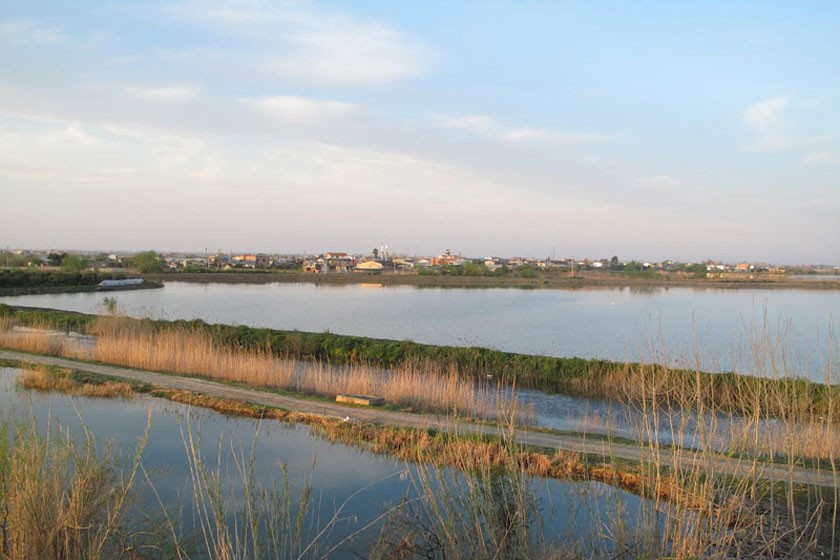
Badab-e Sourt is one of the most striking natural formations in Iran, registered as the country's second natural heritage site after Mount Damavand. The site consists of several springs with water that differs in colour, smell, taste and mineral content. Over centuries, the sedimentary flow has built hundreds of terraced pools in orange, yellow and red on the mountainside, a natural staircase that draws photographers and nature lovers from across the country. The springs lie in the mountainous south of Sari county, and the drive from the city takes roughly an hour.
Chort Lake, in the Chahardangeh district southeast of Sari, was born in 1920 SH when an earthquake blocked the path of a spring-fed stream. The lake covers about 2.5 hectares, and when the water level drops, the trunks of trees that once stood on the site emerge from the surface, creating an eerie and beautiful scene. The approach is through dense Hyrcanian forest, one of the oldest woodland ecosystems on earth, and the walk adds to the experience. Oland Lake, fed only by rain, sits among broadleaf trees that bloom with violets in spring and host wild ducks in winter.
Qajar mansions and the old quarter
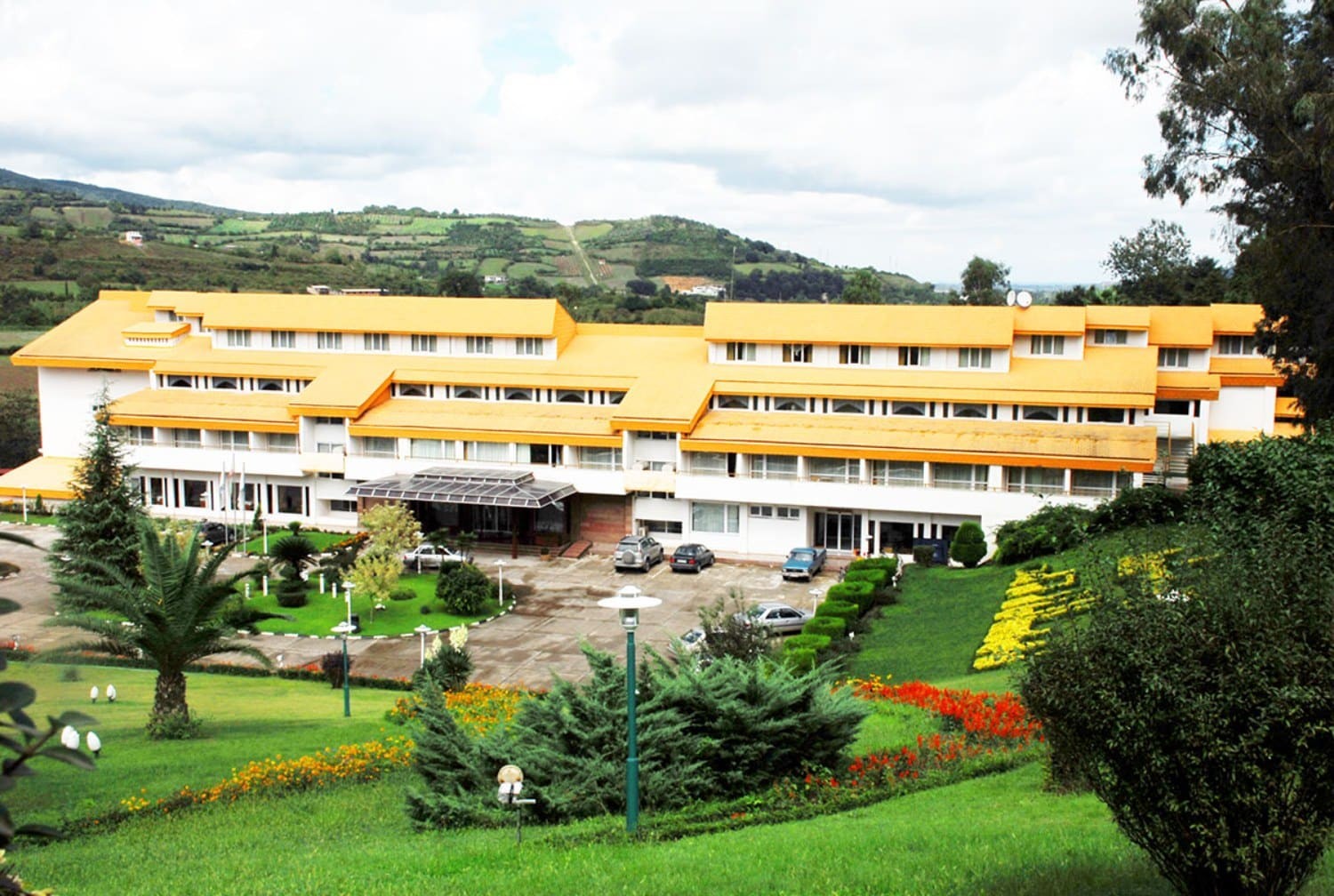
The Kolbadi Mansion was built in the late Qajar period on the orders of Sardar Jalil and given to his son Manuchehr Khan. The house rises two storeys above a basement, constructed of wood and brick with a pitched ceramic-tile roof in the Mazandarani style. The Fazeli Mansion, also from the Qajar period, is valued for its brick ornament and finely carved doors.
Shater Gonbad, a four-sided brick tower from the Timurid period, stands on the southern edge of Sari beside the Tajan River. Near the village of Resket, another tower carries muqarnas and two brick inscriptions in Kufic and Pahlavi script. Each monument adds a layer to the deep historical record of the Sari region.
Best time to visit Sari
Sari has a humid Caspian climate, warm and humid in summer and mild and rainy in autumn and spring. The best window runs from March through May, when the Hyrcanian forests are at their greenest, the terraced pools at Badab-e Sourt reflect the spring sky, and the lakes are framed in fresh foliage. September through November brings comfortable temperatures and autumn colour in the forest canopy. Summer, from June through August, is warm and humid but suits visitors who want to combine Sari with a beach day on the Caspian coast.
Where to stay in Sari
Sari has a range of hotels near the Clock Square and along the main avenues, with options from budget properties to comfortable mid-range hotels. Most first-time visitors choose a central location so the Grand Mosque, Imamzadeh Yahya and the bazaar are within walking distance, and Mehyar Hotels lists vetted choices for every budget. If you plan to spend time at Abbasabad or Badab-e Sourt, a property with early road access to the southern route will save you time.
Mehyar services in Sari
Mehyar covers every part of a Sari visit. Mehyar Flights flies Tehran to Sari in under an hour, Mehyar Buses runs scheduled coaches from the capital and the Caspian cities, Mehyar Taxi handles transfers between the airport, your hotel and the natural sites, and Mehyar Hotels lists vetted properties in the centre and along the forest roads. Mehyar Buses connects onward to Gorgan, Ramsar or Babolsar when your itinerary extends along the coast.