
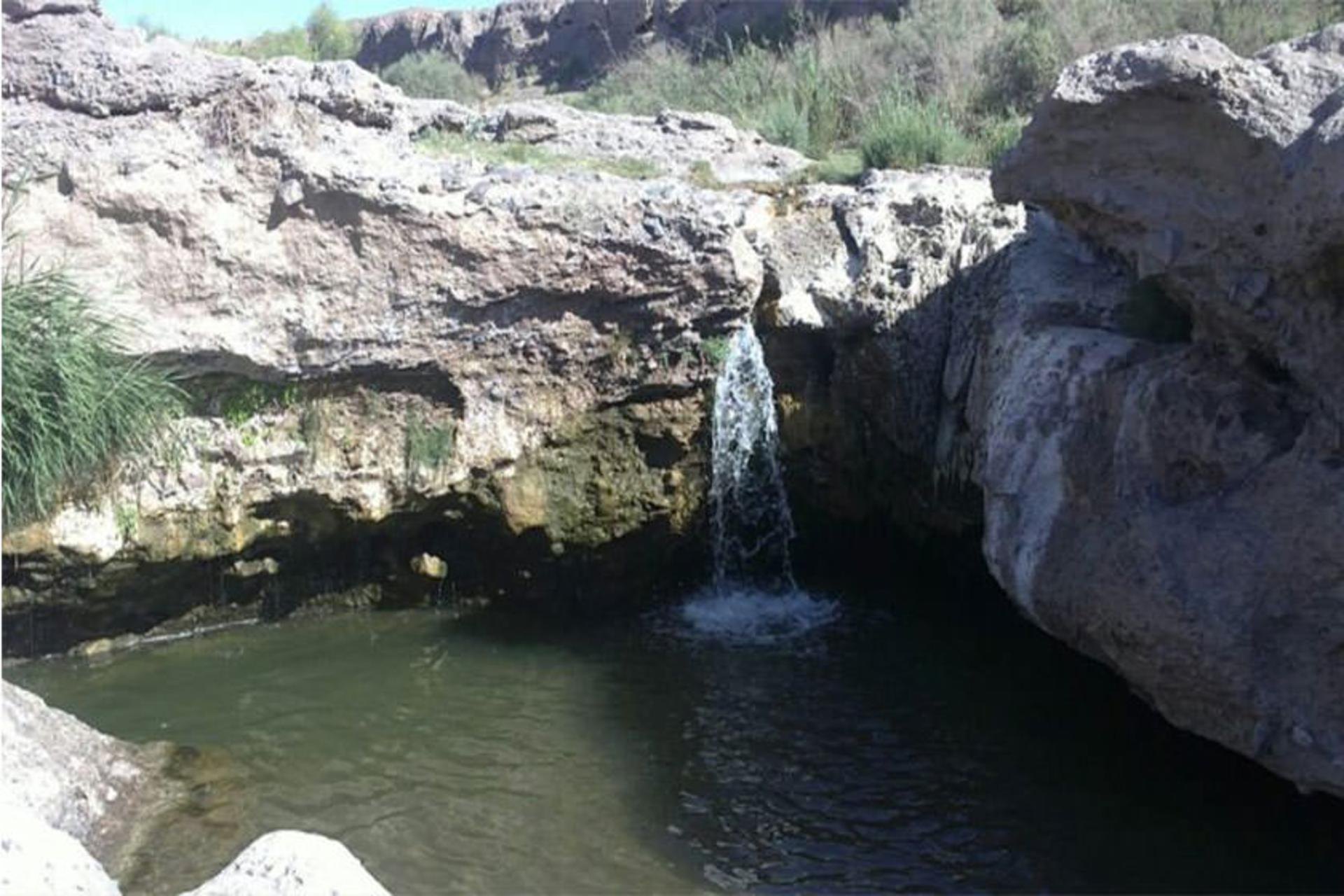
Most waterfalls in Iran announce themselves from a distance, plunging from mountain cliffs or cutting through narrow gorges where the sound of falling water echoes off stone walls. Hajin Waterfall is different. It sits on a flat plain in southern Kerman province, where the landscape is open and expansive rather than steep and enclosed. The Hajin River flows across the level ground and then, quite suddenly, drops six metres over a broad rock ledge into a natural basin below. There is no dramatic approach through a forested valley, no climb to reach the falls. You are walking across the plain and then you are standing at the edge of a waterfall, the water rushing past your feet and then disappearing over the rock into a pool that has been carved by centuries of flow. The contrast between the flat landscape and the sudden drop is what makes the place striking, and the wide rocks around the base provide natural seating for picnics and relaxation that draws visitors from Kerman and surrounding towns every spring and summer.
Where is Hajin Waterfall?
The waterfall is located in the northern part of Bardsir County, Kerman province, beside Hajin village. Bardsir is a county roughly fifty kilometres south of Kerman city, sitting on the high plain that stretches between the city and the mountains to the south. The county is known for its agriculture, particularly pistachio orchards and date palms, which are fed by a network of rivers and qanats that cross the plain. The Hajin River is one of these waterways, flowing through the northern part of the county before it reaches the waterfall.
The village of Hajin is a small settlement near the falls, and the waterfall itself is situated on the river just outside the village. The surrounding landscape is flat and open, with agricultural fields and orchards extending in all directions. The plain is part of the larger Kerman basin, a high-altitude region that sits at approximately 1,700 metres above sea level and has a semi-arid climate with hot summers and cool winters.
The Waterfall and Its Rock Formation
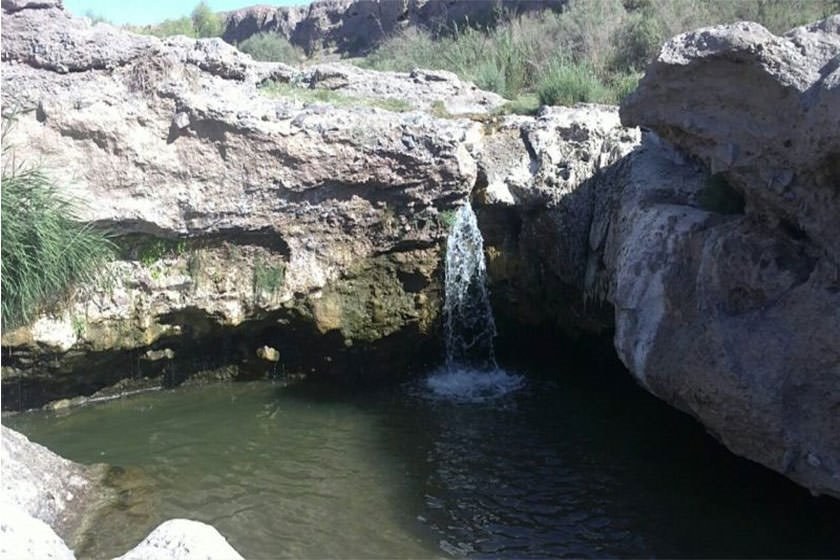
The waterfall drops approximately six metres over a wide, flat rock formation into a natural basin carved by centuries of flowing water. The rock ledge is not a narrow cliff but a broad expanse of stone that the river flows across before it reaches the edge, and the water spreads out as it goes over, creating a curtain rather than a single concentrated stream. The effect is less about the height of the fall and more about the width and the suddenness of the drop in an otherwise level landscape.
The rocks surrounding the base of the waterfall are broad and flat, ideal for sitting, picnicking, or simply listening to the sound of the cascade. These rocks have been smoothed by the water over time, and they form a natural amphitheatre around the pool where the waterfall lands. The pool itself is deep enough that the water is cool and clear, and in spring and early summer when the flow is strongest, the splash from the falling water creates a mist that keeps the rocks damp and pleasant to sit on even in warm weather.
The river continues below the falls, flowing through the plain towards the surrounding agricultural land. The waterfall is not the end of the river but a feature along its course, and the water that drops over the ledge continues to irrigate fields and orchards downstream. The relationship between the waterfall and the agricultural landscape is part of what makes the place feel integrated rather than isolated, a natural feature that has been part of the local water system for as long as people have been farming here.
The Landscape and Local Life
The landscape around the waterfall is open and expansive, offering clear views across the Kerman plain. In spring, wildflowers add colour to the grassy banks, and the agricultural fields are green with new growth. The contrast between the cultivated plain and the natural waterfall creates a landscape that is both productive and beautiful, where human use and natural feature coexist. The orchards and fields around the waterfall are tended by local farmers, and the presence of visitors at the falls is part of the rhythm of life in the area rather than an intrusion.
The waterfall is a popular destination for locals, particularly in spring and summer when the weather is warm and the water flow is strong. Families come to picnic on the rocks, children play in the shallow areas near the pool, and the sound of the waterfall provides a backdrop to conversation and relaxation. The place is not developed for tourism in the way that mountain waterfalls in northern Iran are, with formal trails and viewing platforms. It remains a local spot, known to people from Kerman and Bardsir, where you can sit on a rock by the water and watch the river flow over the ledge without crowds or commercial infrastructure.
This lack of development is part of the appeal. The waterfall is free to visit, there are no entrance fees or formal opening hours, and the experience is straightforward and uncommercial. You come, you sit on the rocks, you watch the water, and you leave. The simplicity is refreshing after the crowded tourist sites of more famous destinations, and the authenticity of the place as a local gathering spot rather than a curated attraction gives it a character that is hard to find elsewhere.
How to get there
Open Mehyar and choose Taxi from Kerman city or Bardsir to reach Hajin village. From Kerman, the drive to Bardsir covers about fifty kilometres and takes roughly forty-five minutes on a road that heads south from the city. From Bardsir, the waterfall is a further short drive to the north, and the road is straightforward and well-signposted. The total journey from Kerman to the waterfall is about an hour by car.
Mehyar Buses connects Kerman to Bam, Sirjan, and other cities in the province. If you are coming from another city, you will need to reach Kerman first and then take a taxi or local transport to Bardsir and the waterfall. Public transport to the waterfall itself is limited, so a taxi or private car is the most practical option for the final leg.
If you are driving yourself, follow the road south from Kerman to Bardsir, and then take the road north from Bardsir towards Hajin village. The waterfall is near the village, and parking is available on the roadside. The walk from the road to the waterfall is short, and the falls are visible from the road in spring when the water flow is high.
The visit takes two to three hours, including time to relax by the water and walk along the river. The area around the waterfall is not large, but the rocks provide comfortable seating, and many visitors spend time simply sitting and enjoying the sound and sight of the water.
Best time to visit
Spring, from March to May, offers the strongest water flow and the most pleasant temperatures. The snowmelt from the mountains to the north feeds the river at its fullest, and the wildflowers are in bloom on the plain. The weather is warm but not hot, and the mist from the waterfall is cool and refreshing.
Early summer, in June, is also popular, though the water flow may be lower than in spring and the temperatures are warmer. The waterfall continues to flow through the summer, and the pool remains a cool place to sit, but the best conditions are in spring.
Autumn and winter bring less water and cooler conditions. The waterfall is still worth visiting, particularly in autumn when the weather is mild and the agricultural landscape is harvested, but the flow is reduced and the experience is quieter. Winter can be cold, and the rocks around the waterfall may be damp and slippery.
Practical tips
The visit is free and the waterfall is accessible at all times. There are no entrance gates or formal opening hours. Bring water and food for a picnic, as there are no shops or cafes at the waterfall itself. The village of Hajin may have small shops where you can buy basics, but it is better to bring what you need from Kerman or Bardsir.
The rocks around the waterfall are flat and comfortable for sitting, but they can be slippery when wet. Wear shoes with good grip, and take care when walking on the rocks near the pool. Children should be supervised near the water, as the pool is deep and the current near the base of the waterfall is strong.
Photography is good in all seasons, with the best light in the morning and late afternoon when the sun is low and the shadows are long. The contrast between the flat plain and the waterfall makes for interesting compositions, and the wide rock ledge provides a good vantage point for photographing the water as it goes over the edge.

Combine the visit with other attractions in the area if you have time. Kerman city has several historical sites, including the Ganjali Khan Complex and the Jameh Mosque. Bardsir County is known for its pistachio orchards, and in autumn you can watch the harvest and buy fresh pistachios from local farmers. The desert landscapes to the east of Kerman, including the Lut Desert, are also accessible for those who want to explore the wider region.