
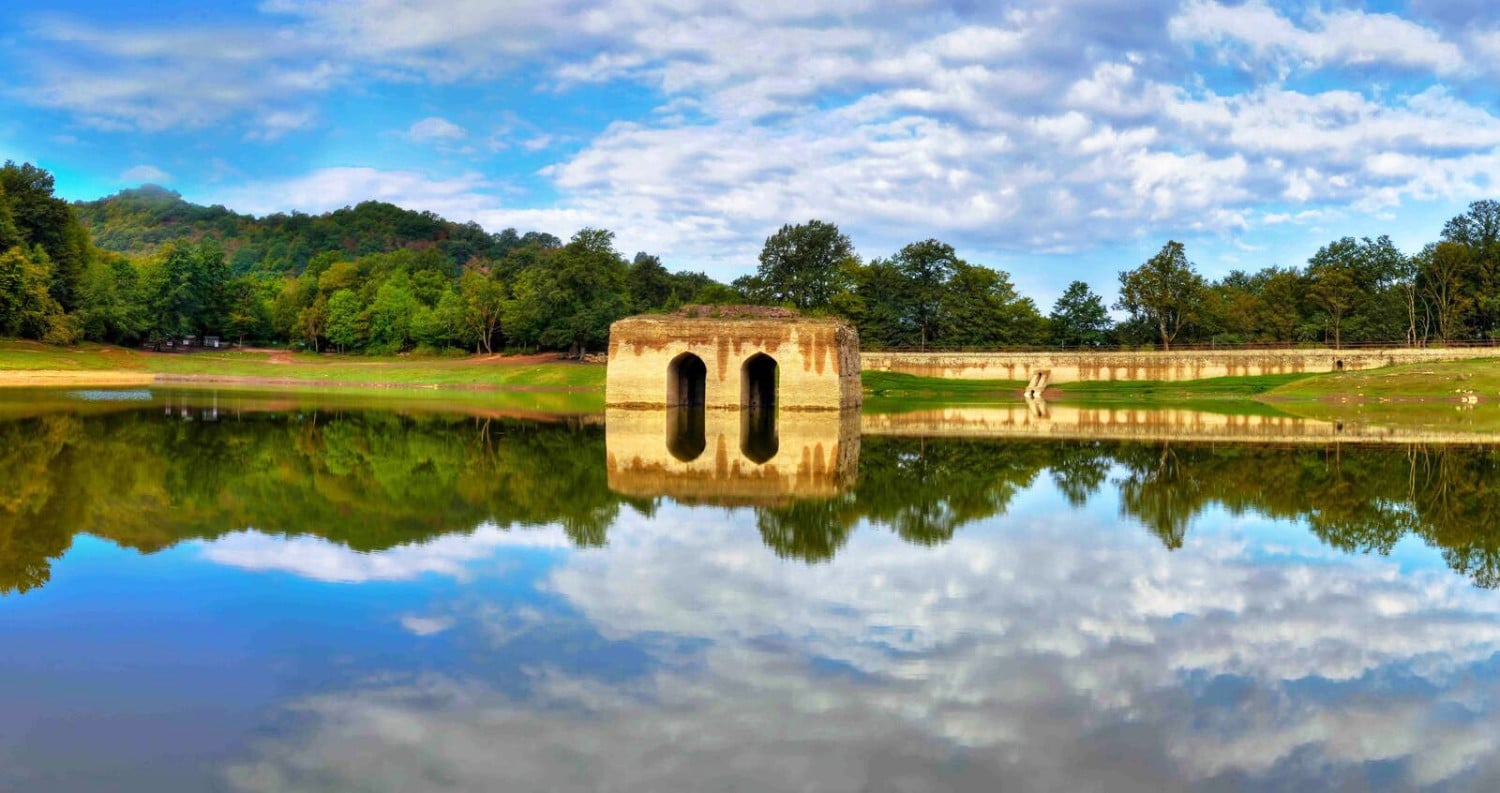
The Abbas Abad Historical Complex is a Safavid-era garden nestled in the forested foothills of the Alborz mountains, roughly 50 kilometres south of Sari in Mazandaran province. Created during the reign of Shah Abbas I, one of the most powerful and far-sighted rulers of the Safavid dynasty, the complex centred on a large stone rectangular pool that reflects the surrounding trees and sky. It remains one of the most atmospheric heritage sites in northern Iran, a place where the formal geometry of a Persian garden meets the untamed greenery of the Hyrcanian forest. The garden is part of the wider cultural landscape of Abbas Abad village, where cool mountain air, ancient plane trees, and the sound of cascading water create a retreat from the Caspian humidity below.
History
Shah Abbas I ruled the Safavid Empire from 1588 to 1629, a period often regarded as the golden age of Iran. He was a great builder, responsible for the magnificent Naqsh-e Jahan Square in Isfahan, the caravanserais that dotted the Silk Road, and numerous gardens and pavilions across the realm. Abbas Abad was part of this building programme, conceived as a royal garden and retreat in the cool highlands of Mazandaran. The choice of site was deliberate: the Alborz foothills offered relief from the summer heat of the Caspian lowlands, and the abundant springs provided a reliable water supply for the garden's pools and channels.
Over the centuries, the complex passed through various hands. The Safavid structures were added to and modified during the Qajar period, and the garden served different purposes under the Pahlavi dynasty and after the 1979 revolution. Despite these changes, the essential layout has survived: the great stone pool, the terraced grounds, and the surrounding forest remain the defining features of the site.
Architecture and layout
The centrepiece of the complex is the large rectangular stone pool, measuring roughly 45 by 90 metres, fed by a natural spring. The pool's still surface mirrors the towering plane trees and elms that line its edges, creating one of the most photographed scenes in Mazandaran. The pool was constructed from local stone, and its simple, unadorned lines reflect the Safavid preference for proportion and harmony over excessive ornament.
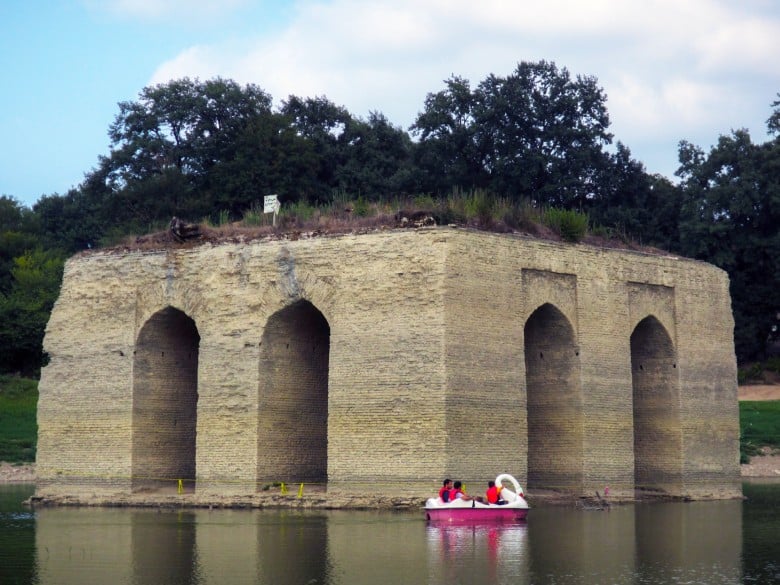
Surrounding the pool are terraced lawns that step down the hillside, each level offering a different perspective on the water and the forest beyond. Ruined Safavid-era structures, including the remains of pavilions and ancillary buildings, are scattered across the terraces. Shaded picnic areas have been added in more recent times, and the site is a popular destination for local families, especially on weekends and holidays.
The garden's design follows the classic Persian chahar bagh principle of dividing space into four quarters, though the steep terrain required adaptations that give Abbas Abad its distinctive character. Water channels once carried the spring's flow through the garden, feeding smaller pools and fountains before continuing downhill to the villages below.
The Hyrcanian forest
The forest around the complex is part of the Hyrcanian, or Caspian, broadleaf forest, a UNESCO World Heritage Site recognised for its ancient biodiversity. These forests date back to the Ice Age, when they covered much of the northern hemisphere. As the climate warmed, the Hyrcanian forest retreated to the narrow band along the southern coast of the Caspian Sea, where the Alborz mountains trap moisture from the sea and create a microclimate that supports an extraordinary range of plant life.
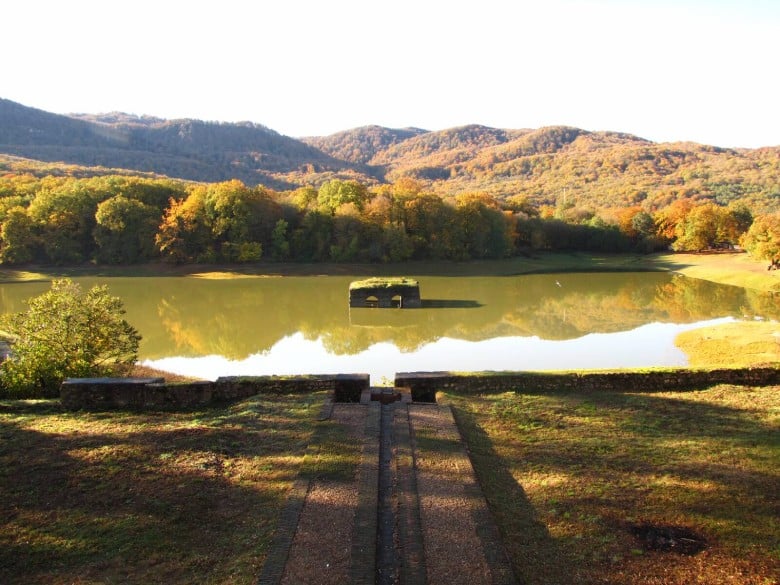
The trees around Abbas Abad include oriental beech, hornbeam, elm, boxwood, and the Caspian chestnut, some of them centuries old. In spring and early summer, wildflowers carpet the meadows above the pool, and the forest is alive with bird song. The Hyrcanian forest is home to species found nowhere else on earth, and walking through it at Abbas Abad gives a sense of the deep natural history that underlies the human garden.
What to see and do
Visitors to Abbas Abad can explore the stone pool and its surroundings, walk the terraced paths, and picnic under the plane trees. The site is compact enough to see in a couple of hours, but many visitors stay longer, enjoying the atmosphere and the cool mountain air. The wider Abbas Abad area also includes a small recreational lake, walking trails through the forest, and viewpoints that offer panoramic views over the Caspian lowlands.
For travellers based in Sari, Abbas Abad makes an excellent half-day or full-day excursion. The drive from the city passes through some of the most scenic countryside in Mazandaran, with winding mountain roads lined with dense forest. Many visitors combine the trip with a visit to the nearby city of Behshahr, which has its own historical attractions.
How to get there
Open Mehyar and choose Taxi from Sari for a direct journey through the Alborz foothills. The road passes through several villages and offers views of the forest canopy. The drive takes approximately one hour. Mehyar Buses connects Sari to Tehran and other cities; from Sari, a taxi completes the final leg. If you are coming from Tehran, the drive to Sari takes around four hours via the Haraz Road, one of the most scenic routes in northern Iran.
Best time to visit
Late spring, from May to June, and early autumn, from September to October, offer the best combination of mild weather, green forests, and manageable crowds. Summer is popular with domestic tourists, and the mountain altitude keeps temperatures pleasant even when the Caspian coast is hot and humid. Winter brings snow and cold, and some facilities may close, though the forest takes on a stark beauty under a covering of snow.
For travellers planning a wider itinerary in Mazandaran, the Lafoor Forest is another outstanding natural destination in the province, and the city of Sari itself has several historical sites worth exploring.